Outboard Won't Start? 4 Quick Steps Before Calling a Mechanic
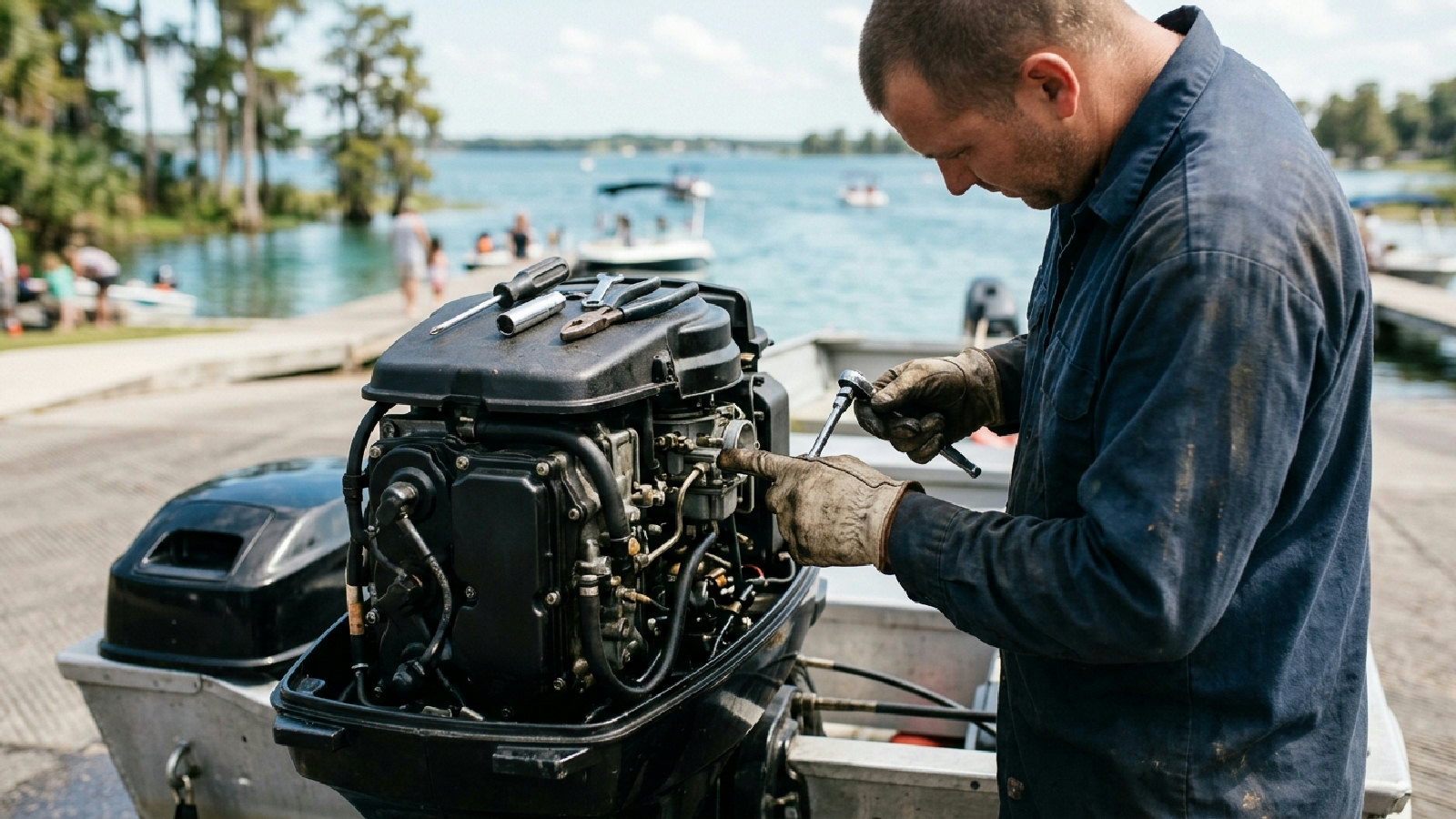
When your outboard won't start at the boat ramp on Lake Minneola, the issue usually boils down to one of three quick culprits: a safety switch left unengaged, a simple fuel delivery restriction, or a loose electrical connection. Before you haul your boat off the Clermont Chain of Lakes in frustration, taking five minutes to systematically check your kill switch, gear shift position, primer bulb, and battery terminals will solve a surprisingly large percentage of no-start issues on the spot.
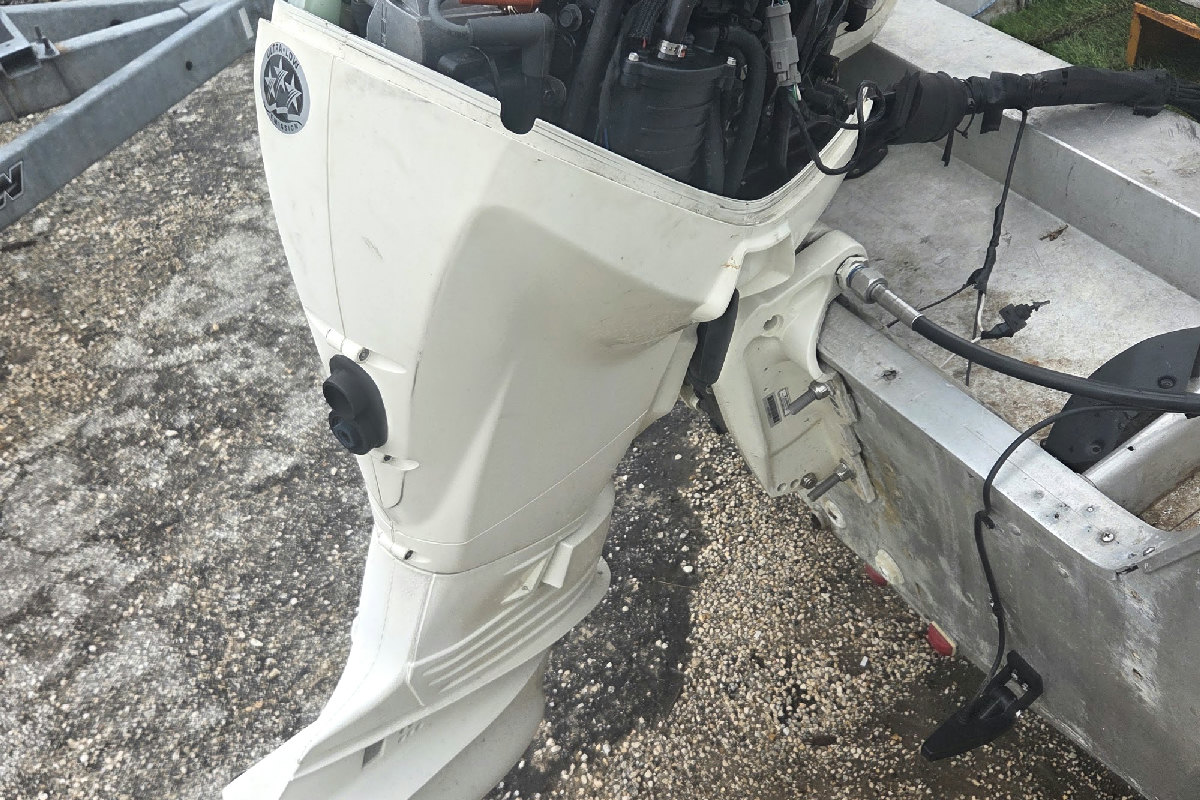
1. Check Your Kill Switch and Neutral Safety Switch
It sounds simple, but safety shut-off features account for a massive chunk of unexpected no-start situations. Modern Yamaha, Mercury, Suzuki, and Tohatsu outboards are designed with failsafes that prevent the engine from starting or firing spark if the motor is not safely configured.
- Emergency Stop Lanyard: Make sure the kill switch clip is pressed firmly into place behind the toggle button or key switch. Even a slight gap can kill the ignition circuit while allowing the engine to turn over without starting.
- Gear Shift Lever: Ensure your control box is completely detented in neutral. If the throttle control is resting slightly forward or back, the internal neutral safety switch stays open. Firmly shift into forward, pull back to neutral, and feel for that solid middle detent before turning the key again.
2. Trace Your Fuel Line from Tank to Motor
Cooler autumn mornings bring out subtle fuel system flaws. As morning temperatures drop, fuel lines become stiffer, and stale gas that sat over late summer can clog tiny passages or idle circuits.
- Check the Tank Vent: If you use a portable gas tank or an above-deck setup, verify the vent screw on the cap is backed all the way open. A closed vent creates a vacuum inside the tank as the fuel pump pulls, starving the engine after a few seconds of cranking.
- Squeeze the Primer Bulb: Pump the inline rubber primer bulb until it feels firm. If it stays completely flat or refuses to harden, you may have an air leak in the quick-disconnect fittings, a stuck anti-siphon valve, or a cracked fuel hose.
- Inspect Fuel Connectors: Disconnect and firmly re-seat your fuel quick-connect fittings on both the engine and tank sides. O-rings inside these fittings can wear out and draw air instead of gasoline into the engine fuel pump.
If you've been running the same fuel for several months without stabilizer, it might be time for fresh gas. You can read more about keeping your fuel system healthy in my guide to the Fall Boat Maintenance Checklist for Clermont Chain of Lakes.
3. Inspect Battery Terminals and Clean Connections
An outboard motor requires a sharp voltage threshold to trigger ignition coils and electronic control units. Even if your trim pump runs or your dash lights turn on, your battery might not have enough clean current to turn the starter under compression.
Check for heavy green or white corrosion crust around your battery posts. Wing nuts are notorious for vibrating loose on choppy water, so check that your heavy-gauge battery cables are secured tight with standard hex nuts or lock washers instead. If you turn the key and hear a sharp single click—or rapid clicking—without the engine spinning over, your starter solenoid is not getting enough amperage due to poor terminal contact or a discharged battery.
4. Pull and Inspect Your Spark Plugs
If your engine turns over strongly and fuel is reaching the system, dirty or fouled spark plugs are often the next suspect. Worn electrodes or plugs covered in dark carbon buildup struggle to produce a strong enough spark to ignite cold fuel mixtures.
Pull your spark plug boots off carefully and use a plug socket to inspect the firing tips:
- Wet with Fuel: The engine is getting fuel but no spark, or the engine was flooded during cranking. Wipe them clean, let the cylinders air out for five minutes, and reinstall.
- Heavy Carbon or Rust: Excess black buildup short-circuits the gap, preventing ignition. If you notice signs of moisture or scaling, severe corrosion could be present. Check out my article on Outboard Corrosion in Freshwater: Central Florida Lakes to understand how water intrusion impacts your engine's internal components.
- White or Glazed Tips: This points to an engine running too hot or lean, which requires professional diagnostic attention.
When to Call a Mechanic for Computer Diagnostics
If you have verified full battery voltage, confirmed clean fuel delivery, checked your kill switch, and your outboard still refuses to fire up, the problem lies deeper in the electrical or fuel injection system. Modern four-stroke outboards rely on precise sensor data from crank position sensors, high-pressure fuel pumps, injectors, and engine control modules (ECMs).
Continuing to crank a stubborn motor can quickly burn out your starter motor or drain your battery completely. This is where professional diagnostic equipment comes into play. Connecting factory diagnostic software directly to your Yamaha, Mercury, or Suzuki outboard allows me to read active fault codes, check fuel pressure, and isolate electrical faults accurately without guessing or wasting money on unneeded parts.
Get Your Outboard Running Right in Clermont
I operate Gann Marine LLC right here in Clermont, FL, providing straight-talking, honest outboard engine repairs for local boaters across Lake County. Whether you need a simple spark plug replacement, a water pump rebuild, lower unit service, or computer diagnostics to trace an elusive electrical problem, I am here to help. I provide clear, itemized estimates online before any work starts so you always know what to expect.
If your outboard motor is acting up or won't start after running through these checks, feel free to book service online or call me directly at (352) 604-0577 to get scheduled.
Frequently asked questions
Why does my outboard turn over fine but won't catch or start?
When an engine cranks at full speed but refuses to start, the issue is almost always a lack of ignition spark or a safety circuit lockout, such as an unhooked kill switch lanyard or a faulty neutral safety switch position.
Can bad fuel prevent my outboard motor from starting?
Yes. Ethanol-blended gasoline degrades rapidly in humid environments, absorbing moisture and forming varnish that clogs internal fuel passages, high-pressure fuel pumps, and carburetors or fuel injectors.
How do I know if my starter motor or battery is failing?
If you turn the key and hear rapid clicking or nothing at all, your battery charge is low or terminal connections are corroded. If you hear a loud single click and the battery tests full, the starter solenoid or starter motor itself may be failing.