Outboard Corrosion in Freshwater: Central Florida Lakes
Many boat owners think of outboard corrosion as a saltwater problem, so freshwater lakes look like the safe choice. That assumption is expensive. Outboard corrosion in freshwater is slower than the coastal version, but it still works every time your motor sits wet, and it starts in places you rarely check, like cooling passages, electrical connections and the gear case. Around the Clermont Chain of Lakes, we see the same pattern again and again: a motor that looked fine from the outside and then failed on the water. Here is where the damage starts, what actually prevents it, and the warning signs to act on before a small problem becomes a lower unit repair.
Table of Contents
- Quick Takeaways
- Why Freshwater Does Not Mean Corrosion Free
- Where Corrosion Starts Inside the Powerhead
- Exterior Damage: Electrical Connections, Propeller and Lower Unit
- Routine Rinsing, Flushing and Drying
- Anti-Corrosion Products: What Works and What Does Not
- Gear Lube and Water Intrusion
- Storage Habits That Slow Corrosion
- When to Bring Your Outboard In
- Frequently Asked Questions
- References
Quick Takeaways
Key Insight | Explanation |
|---|---|
Freshwater still corrodes | Lakes lack salt, but they still deliver oxygen and moisture, and corrosion needs only those two ingredients to start. |
Flush after every trip | Yamaha's corrosion guidance calls for about 15 minutes of fresh water flow after each outing to clear the cooling passages and exhaust. |
Milky gear lube is a red flag | Cloudy or frothy lube means water has entered the gear case, so inspect the seals before the next run. |
Dry corrosion hides in the exhaust | Ethanol fuel by-products can attack hot exhaust surfaces from the inside, which an exterior-only inspection will miss. |
Check sacrificial anodes on schedule | An anode that is spent offers no protection, so inspect it during every oil or gear lube service and replace it before the lower unit takes the damage. |
Dry the motor, then cover it breathably | Trapped water keeps metal wet long after the trip ends, and a sealed plastic wrap holds humidity against the surfaces you want to protect. |
Why Freshwater Does Not Mean Corrosion Free
Corrosion is a natural process that starts when metal is exposed to oxygen and moisture over time. Salt speeds that process up, but it is not the only ingredient that matters. Lake water supplies both oxygen and moisture every day your motor sits in it.
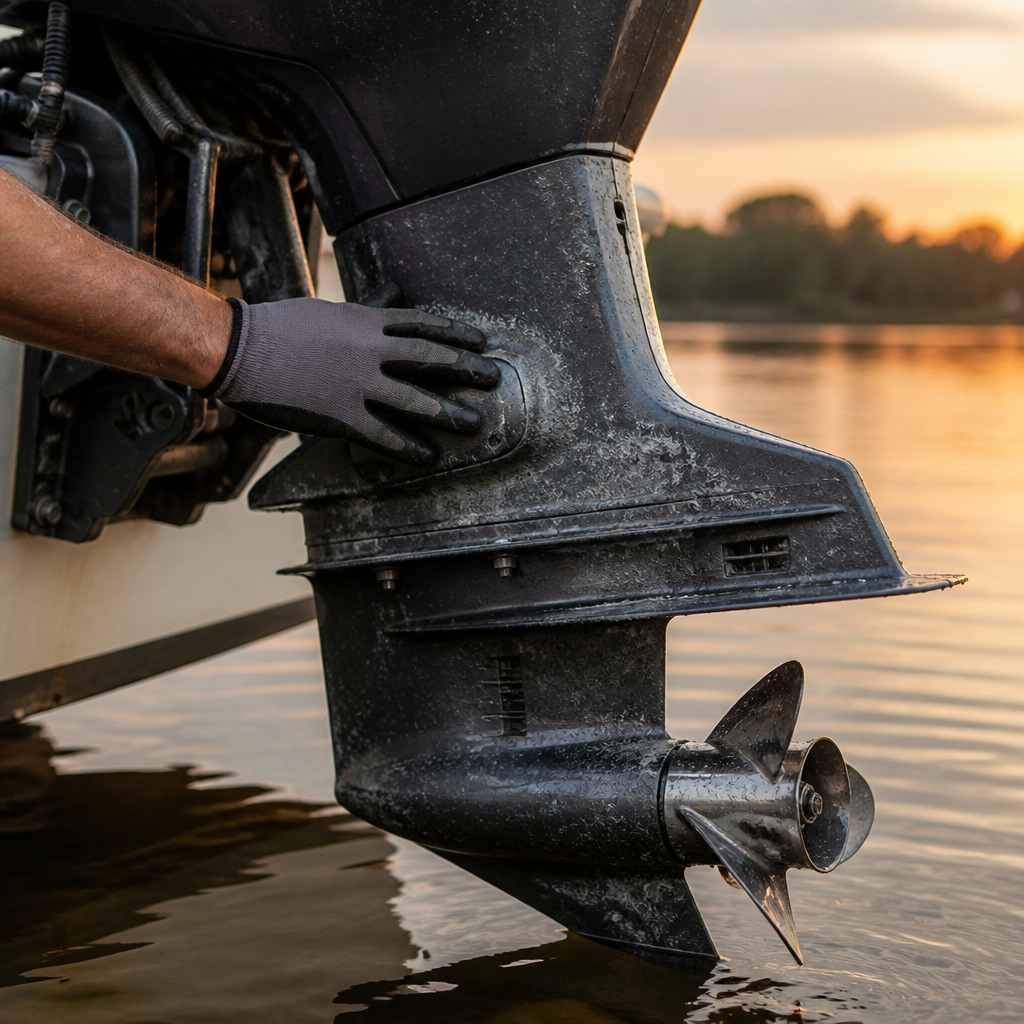
Central Florida lakes add their own complications. Warm weather keeps the water working on your motor for much of the year, and many boats cycle between a lift, a dock and a trailer without a proper rinse in between. Algae, sediment and dissolved minerals settle on lower units and intakes, creating rough spots where moisture lingers.
The mistake we see most often is treating freshwater damage as cosmetic. Chalky staining on a lower unit looks like a finish problem until the corrosion reaches a cooling passage or an electrical connection that starts failing intermittently. At that point, the repair is a parts and labor job, not a rinse and wipe-down.
Yamaha's corrosion prevention guidance makes the same point from the manufacturer side. It notes that corrosion attacks both the inside and outside of an outboard every day, even when you boat in freshwater. Freshwater slows the pace, but it does not remove the threat.
Where Corrosion Starts Inside the Powerhead
The most important internal path is the cooling system. Yamaha describes its outboards as raw-water cooled, which means they use the water they operate in as coolant and push it through internal passages to shed heat. When those passages collect scale, silt or debris, water moves more slowly and metal surfaces stay wet and hot, which is the worst combination for corrosion.
Cooling Passages and Raw Water Flow
A partly blocked intake or a tired thermostat shortens the time water spends moving through the powerhead. In our shop, we pay close attention to the telltale stream during a test run, because weak flow usually shows up before any visible damage does. Regular flushing keeps those passages open and keeps corrosion off surfaces that never see daylight.
Water pump and impeller wear adds to the problem. A worn impeller can lose flow gradually, so the motor runs on less cooling than the gauges suggest. This is why we treat water pump and impeller replacement as corrosion prevention, not just a routine part swap.
Dry Corrosion in the Exhaust
Dry corrosion is the quieter problem. Yamaha's guidance explains that the outside of most exhaust systems is cooled by raw water, and that ethanol-enhanced fuel creates by-products called sulfate salts when it burns. Those salts are highly corrosive at high temperatures, and they concentrate in hot spots when cooling passages are not kept clean.
The practical result is that an outboard can carry internal damage while the outside looks fine. If you inspect only the cosmetic surfaces, you will miss the early warning signs. We check cooling output and the exhaust path during every tune-up for that reason.
Exterior Damage: Electrical Connections, Propeller and Lower Unit
The outside of the motor is where owners look first, and it is where corrosion is easiest to spot. Yamaha's guidance describes exterior corrosion as occurring anywhere from the powerhead surfaces down to the propeller. The goal of a regular inspection and treatment schedule is to remove early corrosion before it spreads under paint or coatings.
Electrical Connections and Grounds
Electrical connections are where freshwater damage tends to appear as a performance problem rather than a stain. A crust on a connector, a ground that loses contact or a starter that clicks without turning can all point to moisture getting past a seal. Yamashield, one of Yamaha's protective products, is described as creating a non-conductive shield on exposed surfaces that helps preserve electrical connections from moisture.
Our diagnostic work often starts here. Intermittent faults that disappear after a wash are frequently moisture related, and a computer scan alone does not always show where the water is entering. A careful hands-on look at the connectors usually finds the source faster.
Propeller, Lower Unit and Sacrificial Anodes
The propeller and gear case take the most direct abuse from the water. Yamaha lists sacrificial anodes among the products designed to protect against marine corrosion, and these parts are meant to corrode first so the motor's metal does not. Once an anode is spent, that protection is gone, which is why checking it belongs in routine service.
A common mistake is waiting until an anode is nearly gone, then ignoring the lower unit for another season. Look at the anode during every oil or gear lube service and replace it once it has lost much of its material. The cost of a new anode is small compared with a lower unit repair.
Routine Rinsing, Flushing and Drying
Routine care is the cheapest corrosion control you have, and it works best when it is consistent. The single most effective habit is a freshwater flush after each outing. Yamaha's guidance calls for flushing with fresh, clean water for 15 minutes after each trip, and that step protects both the cooling passages and the exhaust.
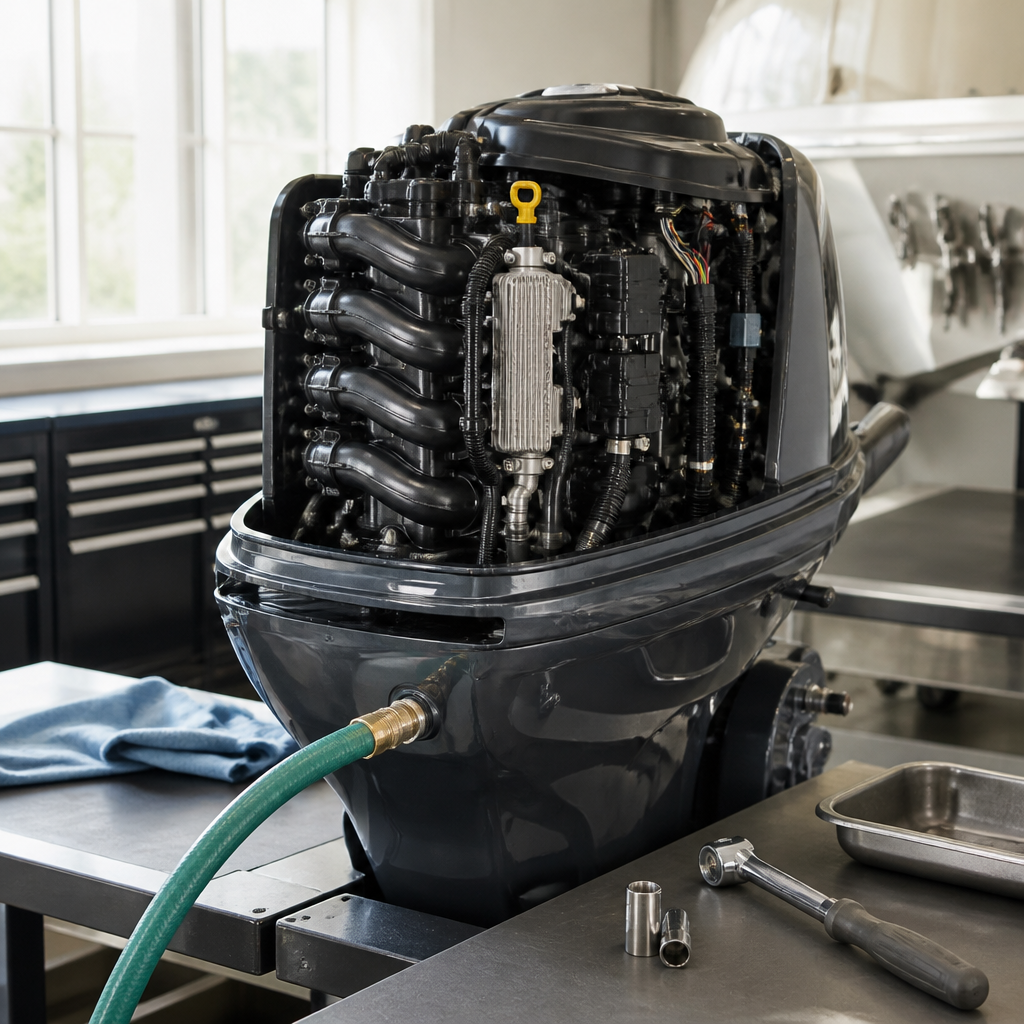
The Fifteen Minute Freshwater Flush
Set up your flush connection before you pack the boat away, not after the motor has been sitting for an hour. Use a flush attachment made for your motor, run the engine in neutral at a safe idle, and keep the water running for the full interval. Confirm that water is flowing from the telltale outlet before you walk away.
The mistake we see most is a quick spray from the hose. That rinses salt and sand off the outside but leaves the internal passages untouched. Lake sediment and algae build up inside those passages just as surely, so rinsing the exterior is not enough.
Drying Before You Cover
Water trapped inside the cowling or in crevices keeps metal wet long after the trip ends. Wipe down the powerhead, the cowling seams and the lower unit, then let the motor air out with the cowling open whenever possible. Drying matters as much as rinsing, because corrosion needs moisture to keep going.
Pro tip: After flushing, check the water intake area for silt or small debris before you start the motor again. Restoring flow is the whole point of the flush, and a clogged intake undoes that work.
Anti-Corrosion Products: What Works and What Does Not
Corrosion products sell well because they feel like a shortcut. Some do real work, and others mostly give you a feeling of protection. The useful questions are whether a product is made for marine metal, whether you will apply it on schedule, and whether it matches the damage you are trying to prevent.
Protective Sprays and Shields
Marine-grade protective sprays put a barrier on exposed metal and electrical connections. Yamaha markets Yamashield for surfaces exposed to the elements, and it recommends using its products according to the manufacturer's instructions. Apply any spray to clean, dry metal, because coating over active corrosion seals the damage underneath.
Protective sprays are not substitutes for flushing. A spray helps keep moisture off surfaces you have already cleaned, but it cannot clear sediment from a cooling passage. Use both, and do not let a can of spray replace the freshwater flush.
Approach | Where It Helps | Where It Falls Short |
|---|---|---|
Freshwater flush after every trip | Clears salt, sediment and algae from cooling passages and the exhaust | Does nothing for corrosion that has already formed on exposed metal or electrical contacts |
Marine-grade protective spray | Adds a moisture barrier on exposed metal and connections | Only works on clean surfaces and needs reapplication to stay effective |
Sacrificial anode replacement | Corrodes in place of the lower unit and gear case metal | Protects only while material remains, so it must be inspected and replaced on schedule |
Sacrificial Anodes
Anodes protect your metal by corroding in its place. Use the anode material and size specified for your motor, because a mismatched part may not protect the surfaces you care about. Then make anode inspection part of the same visit as your oil or gear lube service, so it does not get overlooked.
Gear Lube and Water Intrusion
Gear lube tells you more about the lower unit than most owners realize. It should look clean and consistent, and any sign of water inside means something has allowed moisture past the seals. Once water reaches the gear case, corrosion can start on bearings and gear surfaces where you cannot see it.
Milky or frothy gear lube is the warning sign we see most often on boats that run the lakes regularly. It usually points to a failed seal or a damaged gasket. Waiting until the lower unit shows a visible problem almost always means a larger repair.
Reading the Drain Sample
When you drain gear lube, look for a milky color, a metallic sheen or small particles in the fluid. Any of those signs justifies a closer look at the seals before the next run. A gear lube service is a natural time to check for water and inspect for wear at the same time.
Water in the gear case is rarely a one-time event. If you find it once, assume it will return until the seal or the cause is fixed.
Water Pump and Impeller Wear
The water pump and impeller protect the motor from overheating and from the internal damage that overheating causes. A worn impeller loses flow, and a failing water pump can let water reach places it should not. We treat water pump and impeller replacement as part of corrosion control, because both parts protect the metal that corrosion attacks first.
Storage Habits That Slow Corrosion
Storage is where corrosion gets a head start. A motor left wet, sealed in a cover or parked with residue inside can corrode faster than one used every weekend. The goal is to keep the motor dry, ventilated and shielded from UV exposure.
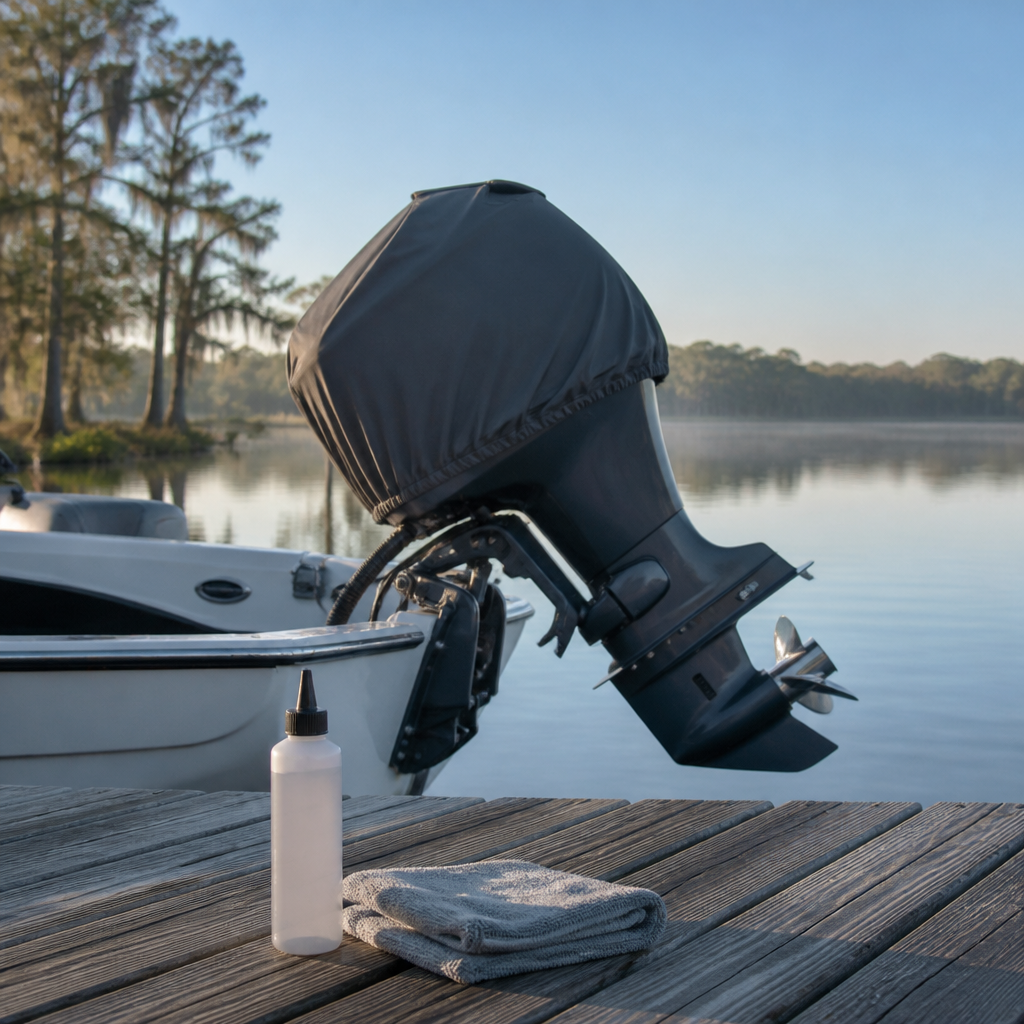
Breathable Covers, Not Plastic Wrap
Boat Country's guidance recommends a breathable cover that lets moisture escape while protecting the motor from dirt and UV rays. A sealed plastic wrap traps humidity against the metal it is supposed to protect. Breathable material keeps the air moving, which keeps surfaces drier.
Lift the cover now and then to check for condensation, and make sure the motor is dry before the cover goes back on. In humid weather, that check takes a minute and catches problems early.
Lifts, Trailers and Docks
Motors that sit in the water between trips face constant exposure, and dock water rarely gets fully flushed out of the lower unit. If the boat stays in the water, flush after each use, rinse off debris and check the motor more often than a trailered boat needs.
On a trailer, position the motor so water drains away from the cowling and the lower unit. Standing water in those areas keeps corrosion going, and a few minutes of drainage at the end of each trip is an easy habit to keep.
When to Bring Your Outboard In
Some corrosion problems improve with better habits, and some do not. Knowing which category your motor falls into saves money and keeps small problems from becoming lower unit failures. As a local shop, our job is to tell you honestly which situation you are in.
Warning Signs That Justify a Visit
Bring the motor in if you see milky gear lube, a weak telltale stream, rust-colored staining from the powerhead, or electrical faults that come and go. Overheating alarms, rough idle and hard starts after a wash can also point to moisture or flow problems. Those signs deserve an inspection before the next trip, not after the motor stops on the water.
How We Handle the Estimate
Every job starts with an itemized estimate, and you approve it online before any work begins. You can choose whether we source the parts or whether you supply your own. We work on Yamaha, Mercury, Suzuki and Tohatsu outboards, and the mechanic who inspects your motor is the same one who completes the repair.
We are not a factory dealer. If a problem falls under warranty, we refer you to the brand's dealer, and if a job is better handled elsewhere, we will say so. You can book online or by phone at gannsmarine.com, and every request is confirmed by email. We serve boat owners in Clermont, Tavares, Groveland, Mascotte and around the Clermont Chain of Lakes.
Pro tip: When you first notice a change in the telltale stream, the gear lube color or an electrical symptom, write down the date and take a photo. A dated record helps the mechanic see what changed and how quickly.
Frequently Asked Questions
Does freshwater really cause outboard corrosion?
Yes. Freshwater lacks the salt that speeds corrosion along, but it still supplies oxygen and moisture, and sediment and algae can hold water against metal. The damage is usually slower than on the coast, but it is not absent.
How soon after a lake outing should I flush my outboard?
Flush as soon as practical after each trip. Yamaha's guidance calls for about 15 minutes of fresh water flow, and if you cannot flush right away, rinse the exterior and drain any standing water when you get home.
Can I use any anti-corrosion spray on my motor?
Use products made for marine use and follow the label directions. Protective sprays help exposed surfaces and connections, but they do not replace flushing and they will not fix corrosion that is already active under the coating.
What does milky gear lube mean?
It usually means water has entered the gear case, most often past a failed seal or gasket. Have the lower unit inspected before running the motor again, because water inside can corrode bearings and gears.
Can I spot dry corrosion from the outside?
Not reliably. Dry corrosion develops inside exhaust components, so a clean-looking exterior does not rule it out. Checking cooling flow, flushing regularly and including the exhaust path in a tune-up gives a much better picture.
Do you handle warranty repairs?
We are not a factory dealer. Warranty claims go to the brand's dealer, and we will point you in the right direction when that applies.
We would love to hear about the corrosion problems you have seen on your outboard and which habit has helped you most.
We would love your feedback and any insights you would share with others. What perspective would you add?