Outboard Won't Crank? Marine Electrical Repair in Clermont
When you turn the key on your outboard and hear nothing but a single click—or dead silence—a failed electrical connection is usually the culprit. Before assuming your starter motor is dead, you can trace the issue by systematically inspecting your battery voltage, ground connections, key switch, and starter solenoid. Catching corrosion or loose wiring early saves you from getting stranded on the Clermont Chain of Lakes during fall fishing trips.
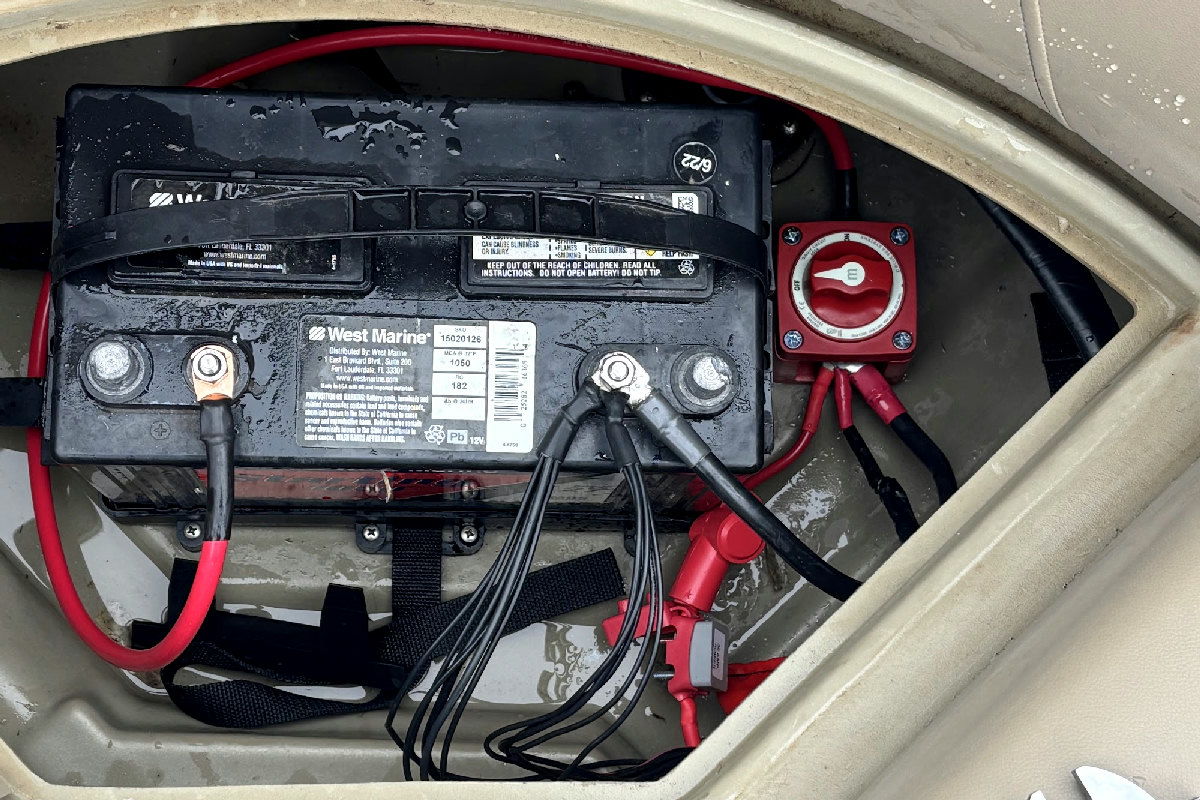
Step 1: Check Battery Voltage Under Load
A battery can show 12.6 volts on a static voltmeter but still fail to turn over an outboard motor. Late summer heat rapidly degrades marine battery plates, causing sudden internal failures by autumn. Connect a multimeter to your battery terminals and turn the ignition key to the crank position. If the voltage drops below 10.5 volts during cranking, your battery lacks the cold cranking amps (CCA) needed to engage the starter, even if it runs your stereo or livewell pump fine.
Step 2: Inspect Main Battery Leads and Grounds
Freshwater lakes still cause heavy wiring oxidation over time. Marine electrical repair often starts with simple ground inspection. Unbolt both the positive and ground cables at the battery and at the engine block. Clean the ring terminals down to bare metal with a wire brush or sandpaper, reattach them tightly, and seal them with dielectric grease or marine grade corrosion blocker.
Step 3: Test the Starter Solenoid and Key Switch
If your battery tests healthy and grounds are clean, the breakdown lies in your ignition circuit:
- Safety Kill Switch: Ensure your lanyard clip is fully seated. A partially displaced lanyard switch completely cuts current to the starter circuit on Yamaha, Mercury, Suzuki, and Tohatsu outboards.
- Shift-in-Gear Protection: Move your control lever back and forth between reverse and forward, then snap it firmly into neutral. A misaligned neutral safety switch will prevent cranking.
- Solenoid Signal: Use a test light on the small primary terminal of your starter solenoid while turning the key. If the light illuminates, your ignition switch and harness are delivering power, pointing the issue directly toward the solenoid or starter motor itself.
When to Call a Mechanic
If you have verified clean battery posts, confirmed full voltage, and still face a silent ignition or persistent electrical tripping, it is time for professional computer diagnostics and circuit testing. Electrical issues can quickly burn out expensive ignition coils or stator assemblies if bypassed incorrectly. If you are experiencing a complete starting failure, review our guide on what to check when your outboard won't start for additional fuel and safety tips.
At Gann Marine LLC, I provide straightforward troubleshooting and general repairs for Yamaha, Mercury, Suzuki, and Tohatsu outboards right here in Lake County. I supply itemized estimates before any work begins so you stay completely in control of the repair process. Feel free to book service online or call me directly at (352) 604-0577 to get your boat back in top shape.
Frequently asked questions
Why does my outboard click when I try to start it?
A rapid clicking sound usually indicates low battery voltage or a loose terminal connection. A single loud click typically points to a failing starter solenoid or a stuck starter pinion gear.
Can I bring my own replacement electrical parts?
Yes, at Gann Marine LLC, customers are welcome to supply their own parts for service and installation.
Do you perform factory warranty repairs on marine electronics or engines?
No, Gann Marine LLC is an independent repair shop and does not perform factory warranty work.