Boat Engine Not Turning Over? Outboard Electrical Guide
When you turn the key on your outboard motor and hear absolutely nothing—or just a single, hollow click—your boat engine is not turning over. This is a classic marine electrical issue. Unlike an engine that cranks rapidly without starting, a motor that won't turn over at all is suffering from a break in the electrical circuit or insufficient power reaching the starter motor. Before you cancel your trip on the Clermont Chain of Lakes, there are a few simple electrical diagnostic steps you can take to pinpoint the cause.
Understanding the Outboard Cranking Circuit
For your outboard to crank, a large amount of direct current must flow from your battery through heavy-gauge cables to the starter motor. At the same time, a smaller control circuit runs from your ignition key switch, through safety devices, to trigger the starter solenoid. If any link in either circuit fails, the engine remains dead. Here are the four primary culprits behind an engine that won't turn over.
1. Low Battery Voltage and Hidden Cable Corrosion
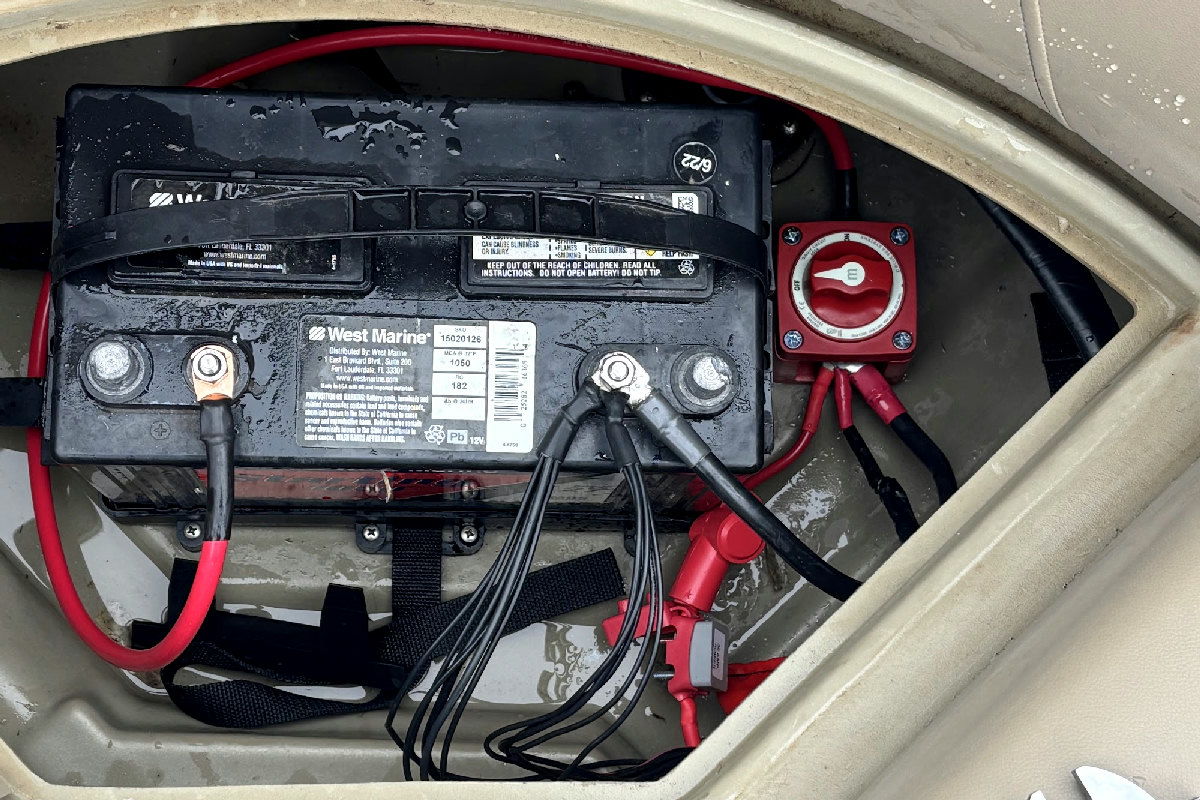
A battery can read 12.0 volts on a basic gauge and still fail to crank an outboard motor. Under the heavy load of a starter motor, a weak battery's voltage will instantly collapse. Furthermore, marine battery cables frequently suffer from internal corrosion. Even if the outside of the wire looks fine, green copper oxide inside the lug terminal creates massive electrical resistance.
- Check your terminals: Ensure battery wingnuts or hex nuts are tight with lock washers. Hand-tight wingnuts often vibrate loose, creating a high-resistance connection.
- Inspect for voltage drop: If you turn the key and your dash electronics shut down completely, your battery is severely discharged or a primary cable connection is loose.
- Jump starting: While you can jump start a boat using a jump pack or secondary battery, always ensure correct polarity. Modern Yamaha, Mercury, and Suzuki outboards contain sensitive electronics that can be damaged by sudden voltage spikes. If you suspect starter wiring issues, read our breakdown on outboard marine electrical repair in Clermont.
2. The Neutral Safety Switch
Outboard control boxes feature a built-in safety switch that prevents the starter motor from engaging if the engine is in gear. Over time, the mechanical linkage inside the control box can wear, or the switch itself can misalign. If the throttle lever is even a fraction of an inch outside of absolute neutral, the circuit stays open, and the motor will not crank.
Try firmly wiggling the control lever back and forth while pushing it securely into the neutral detent. Then, attempt to turn the key again. If the engine suddenly cranks, your neutral safety switch or throttle control cable needs adjustment.
3. Loose Ground Connections
In a marine environment, ground connections fail just as often as positive cables. The main battery ground fastens directly to the engine block. Damp air and moisture cause oxidation between the cable lug and the clean metal of the engine block. If the ground connection is compromised, electrical current cannot complete its path back to the battery, preventing the starter from engaging.
4. Starter Solenoid and Ignition Switch Failures
The starter solenoid acts as a heavy-duty relay switch. When you turn your key to the "start" position, a small wire sends a 12-volt signal to the solenoid, which closes high-current contacts to feed the starter motor.
- Single loud click: If you hear a single distinct click near the motor when turning the key, your ignition circuit and solenoid trigger are working, but power is failing to pass through the solenoid to the starter motor (or the starter motor itself is locked up).
- No sound at all: If there is zero sound, the issue usually lies upstream—a blown main fuse under the engine cowl, a bad ignition switch, a disconnected kill switch lanyard, or a faulty neutral safety switch.
When to Call a Professional Mechanic
If your battery is fully charged, your terminals are clean, and your control box is firmly in neutral, but the motor still refuses to turn over, the issue requires professional computer diagnostics and voltage drop testing across the starter circuit. Attempting to bypass safety switches or directly jumping starter solenoids with screwdrivers can damage expensive outboard control units or pose a fire risk.
If you've verified that your engine is actually cranking fine but simply refusing to fire up, review our guide on outboard motors turning over but not starting to check fuel and ignition delivery.
Frequently asked questions
Can a bad kill switch stop the engine from turning over?
On most modern Yamaha, Mercury, Suzuki, and Tohatsu outboards, a disconnected emergency lanyard kill switch stops the ignition system from firing, but the motor will still turn over. However, on certain older models or specific wiring setups, the kill switch directly interrupts the starter circuit. It is always best to double-check that your lanyard clip is securely in place.
Why does my battery show 12 volts if it won't start the boat?
A standard 12-volt marine battery is fully charged at 12.6 to 12.7 volts. A reading of 12.0 volts actually indicates a battery that is nearly discharged. Furthermore, static voltage does not measure cold cranking amps under load; a battery can hold static voltage but lack the amperage necessary to rotate the starter motor.
Do you provide mobile diagnostic service for electrical issues?
Yes. Gann Marine LLC offers mobile outboard repair across Lake County and Orange County. We bring diagnostic equipment, starter testing tools, and system scanners directly to your dock, lift, or driveway in Clermont, Winter Garden, Windermere, and surrounding areas.
If your outboard motor is stuck at the dock and won't crank, let an experienced technician handle the troubleshooting. You can book service online or call Gann Marine LLC today at (352) 604-0577 to schedule a shop drop-off or mobile service appointment.