Outboard Water Pump Failure: 5 Signs to Catch Early
Most water pump outboard failure signs show up quietly. The rubber impeller wears down a little on every outing, the cooling flow drops by degrees, and then one hot afternoon on the lake the temperature alarm sounds a long way from the ramp. Learning to spot the early signs is the cheapest insurance you can buy for your engine. Below are the five signs we check first on Yamaha, Mercury, Suzuki and Tohatsu outboards, what each one means, and how to decide between a quick impeller swap and a full pump service.
Table of Contents
- Quick Takeaways
- What Your Water Pump Does and Why It Fails Quietly
- Sign 1: Weak or Intermittent Telltale Stream
- Sign 2: Engine Running Hotter Than Normal
- Sign 3: Steam or White Smoke From the Exhaust
- Sign 4: Reduced Power and Rough Running
- Sign 5: Rubber Vane Debris and Dry-Run History
- Why Impellers Wear Out Faster on Central Florida Lakes
- Impeller Replacement and Pump Service Near Clermont
- Frequently Asked Questions
- References
Quick Takeaways
| Key Insight | Explanation |
|---|---|
| Check the telltale stream first | Run the engine at idle with the lower unit submerged and watch for a steady, strong stream. Clear the outlet with a thin pipe cleaner before blaming the pump. |
| Treat a hot engine as an emergency | Throttle back, shift to neutral, and confirm flow before running it again. Heat can damage gaskets and parts within a short time at high load. |
| Know your engine's normal temperature | Operating temperature varies by brand and model. Record the normal reading on a calm day so a real climb stands out. |
| Brief vapor on a cold start is not steam | A short puff on a cool morning is condensation. Vapor or white smoke that continues after warm-up points to a cooling problem. |
| Weeds, sand and dry starts cause most early wear | On Central Florida lakes, debris in the intake and running the engine out of water wear impellers faster than age alone. |
| Replace on a schedule, not after a symptom | Inspect the impeller every season and follow your manufacturer's service interval. Waiting for a failure usually means the engine has already run hot. |
What Your Water Pump Does and Why It Fails Quietly
The water pump sits in the lower unit and is driven by the driveshaft. It draws water from the lake through the intake and pushes it through the engine's cooling passages, then out through the telltale. Its heart is a rubber impeller that works like a fan inside a housing.
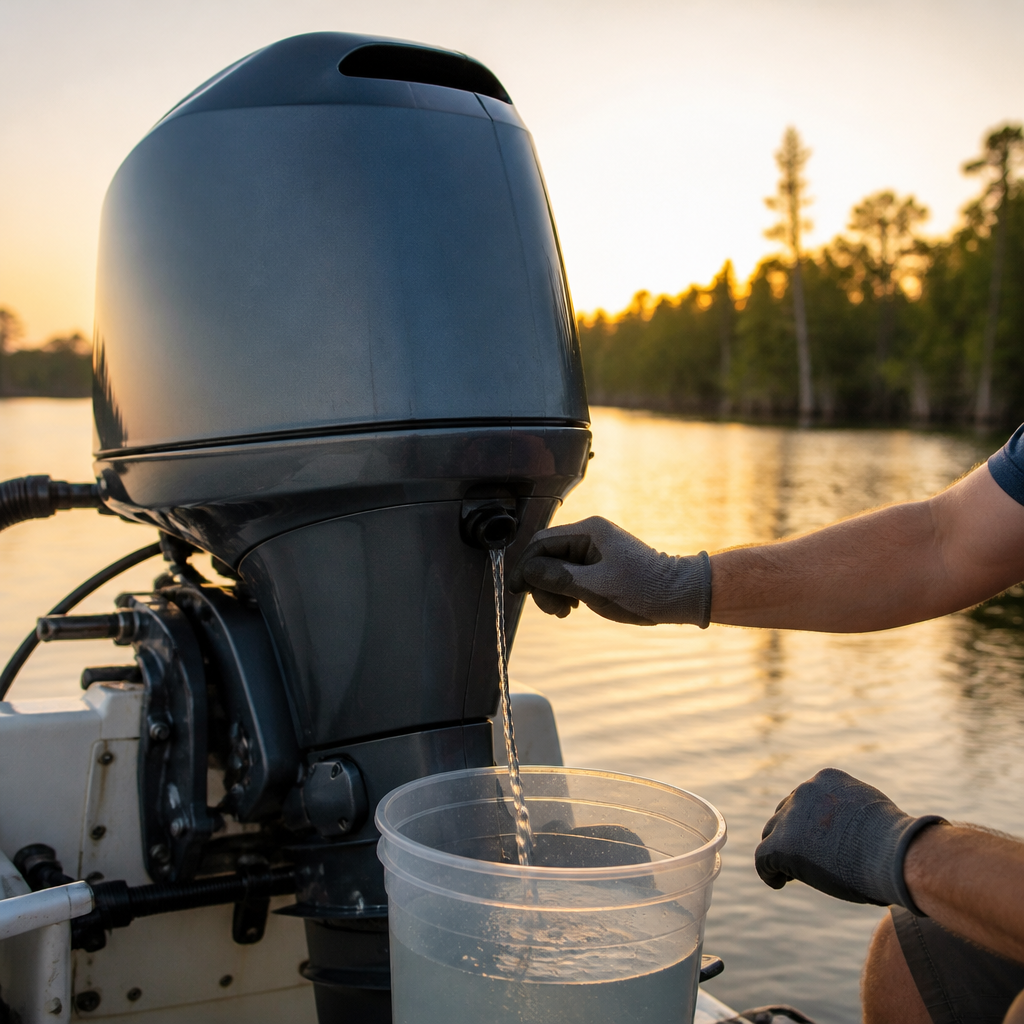
The impeller is the part that fails. Its rubber vanes stiffen, crack and tear with age, and they wear fastest when they run dry, pick up sand, or chew through grit. A pump that has lost part of its output still moves water, so the engine keeps running until the heat builds.
Two design points explain why owners miss the warning. First, the pump is hidden in the lower unit, so there is nothing to see unless you check the telltale or the gauge. Second, modern engines are good at protecting themselves, so a power reduction can feel like a fuel problem until you check the cooling system.
That is why the five signs matter. Almost every failure shows up first as a change in flow or temperature, long before anything breaks outright. Catching that change early usually means a pump service or an impeller swap, not a cylinder head.
A water pump rarely fails all at once. It loses capacity a little at a time, and the engine shows you the change long before it quits.
In the shop, the pattern repeats. An owner notices the stream looks thinner than last season, decides it can wait until the next trip, and then the alarm sounds on a hot afternoon far from the ramp.
Pro tip: Write down your engine's normal telltale strength and running temperature after each service. A simple baseline makes a change obvious months before it becomes a breakdown.
Sign 1: Weak or Intermittent Telltale Stream
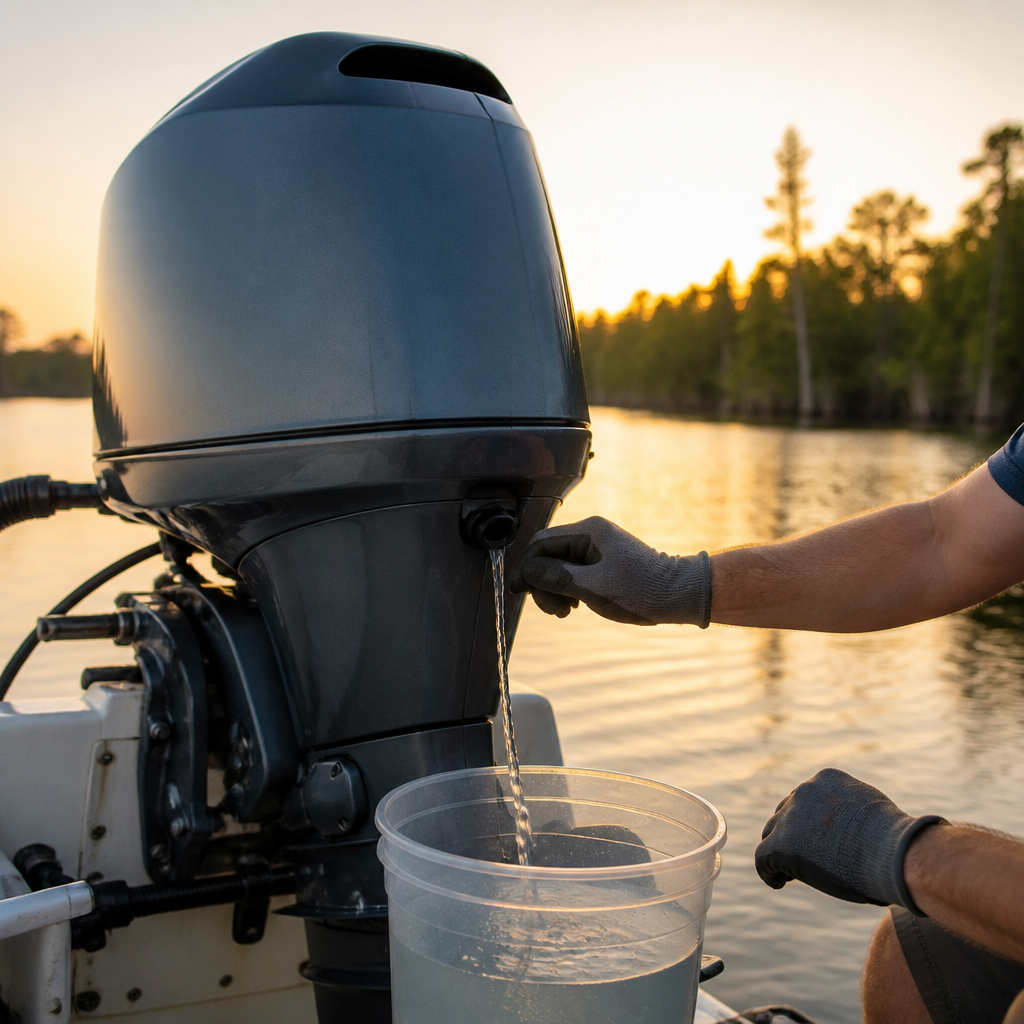
The telltale is the small outlet on the lower unit where a stream of water shoots out while the engine runs. It is the simplest check you have, because a strong, steady stream confirms that the pump is moving water through the engine. If the stream thins, sputters, or stops, the pump is not circulating enough water.
How to Read the Telltale Stream Correctly
Check it with the engine running at idle in water, and make sure the lower unit is fully submerged. A healthy stream should be steady and easy to see from several feet away, with consistent volume. A stream that dribbles, starts and stops, or looks different from the one you saw last season is your first real warning.
Compare the stream at the same engine speed each time, and check it once the engine is warm. Speed changes the volume, so a stream that looks fine at idle can be weak at higher RPM. Use your notes from a known good day as the reference.
Clearing the Outlet Before You Condemn the Pump
Salt deposits, mud and small debris can clog the telltale passage, and that clog looks exactly like a failing pump. On some Yamaha F-series engines, a thin pipe cleaner is enough to clear it. Do this first, because it costs nothing and sometimes solves the problem on the spot.
If the outlet is clean and the stream is still weak, look upstream. A clogged water intake starves the pump, and weeds, sand or even a plastic bag can partially block it. The pump cannot push water that never reaches it, so the intake deserves the same attention as the impeller.
When a Clean Outlet Still Runs Weak
A clear outlet and a clean intake, with a stream that is still weak, point at the pump itself, most often worn impeller vanes. At that stage, stop running the engine at high speed and schedule an inspection. Waiting until the stream stops entirely usually means the engine has already been running hot.
Do not treat a weak stream as a minor annoyance. It is the earliest sign on this list, and it appears before the temperature gauge moves. An owner who checks the telltale at the start of every outing will usually catch the problem while it is still a simple repair.
Sign 2: Engine Running Hotter Than Normal
Temperature is the sign that causes the most damage when it is ignored. A cooling system that cannot keep up lets heat build in the head and exhaust passages, and the damage can begin within minutes at high load. Knowing what normal looks like on your specific engine is the only reliable way to spot a climb early.
Normal Operating Temperature by Brand
Many outboards run in the range of roughly 140 to 160°F under normal conditions. Some engines run a little warmer by design. Mercury OptiMax models, for example, often sit around 160 to 170°F, so a reading that looks high on one engine may be normal on another.
Check your owner's manual for your engine's baseline, then record the reading on a calm day with good cooling flow. Engines differ by brand and model, so do not assume one set of numbers applies to every outboard. A written baseline is far more useful than a general rule.
What the Overheat Alarm Is Telling You
Newer outboards have temperature sensors and audible alarms that commonly trigger somewhere around 200 to 210°F. Frequent alerts, especially on the same stretch of water, are a sign the impeller is wearing or has failed. Older engines may have no alarm at all, so the gauge becomes your only warning.
When the alarm sounds, act in order. Reduce throttle, shift to neutral, and confirm there is a strong telltale stream before you do anything else. If there is no flow, shut the engine down and do not restart it until the cause is found.
The most common mistake is assuming the alarm is false and continuing to run. Even a short period at high temperature can damage gaskets and warp parts, and the repair bill grows quickly. Treat every overheat alarm as a real event until you have proof otherwise.
Pro tip: If you have to limp back to the ramp, idle the whole way and keep an eye on the gauge. Never try to outrun a rising temperature by pushing the throttle.
Sign 3: Steam or White Smoke From the Exhaust
Cooling water does more than cool the cylinders. It also passes through the exhaust passages to keep those parts from overheating, so when flow drops, the exhaust area shows it. Steam or persistent white vapor where there should be none is one of the clearest signs that the pump is not keeping up.
Telling Normal Vapor From a Cooling Problem
A brief puff of vapor on a cold morning start is common, especially in cool air, and it usually clears within a minute or two as the engine warms. That is condensation burning off, not a cooling failure. Owners who see this every morning do not need to panic.
The warning sign is vapor that keeps coming after the engine has warmed up, or thick white smoke that stays at steady throttle. That pattern means the cooling water is not carrying heat away the way it should. Stop and check the telltale before running the engine any further.
When Steam Turns Into a Burning Smell
Steam rising from the cowling, or a smell of hot metal, paint or wiring, means the engine is already taking damage. Shut it down right away. Do not restart it to test the theory, because each restart adds heat to parts that are already stressed.
Once the engine has cooled, check the telltale outlet, the water intake and the impeller. A burning smell after a steam event often means the impeller failed along with other heat damage, so have the engine inspected before it goes back into service. A quick look now costs far less than a head job later.
Sign 4: Reduced Power and Rough Running
Power loss is the sign owners most often misdiagnose. Hesitation on throttle, a rough idle, or misfiring under load feels like a fuel or ignition fault, so many people start by pulling plugs or cleaning carburetors. Heat is a common cause of these symptoms, and it deserves a check first.
Why Heat Robs Power
An engine running too hot cannot maintain clean combustion. Excess heat can cause pre-ignition and detonation, which rob power and roughen the running. The engine's management system may also reduce output to protect itself, which feels like the motor has lost its punch.
The timing gives it away. If the roughness starts after the engine has been running for a while, and the temperature climbs as the symptoms appear, the cooling system is the first suspect. A fuel problem usually does not follow the heat up and down in the same way.
Ruling Out Fuel and Spark First
Fuel and spark problems are real, so do not ignore them. Worn or fouled spark plugs, a dirty fuel filter, or stale fuel can all cause rough running, and spark plug replacement is part of our routine work. The difference is that these faults tend to be present from the first minute, not only after heat builds.
In practice, we check cooling flow and temperature behavior before replacing plugs and filters. That order saves money and avoids replacing parts that were fine. If the symptoms disappear once the cooling system is restored, you have your answer.
Pro tip: Note whether the roughness shows up on a cold start or only after the engine has been running for a while. That timing tells you more about heat than any single gauge reading.
Sign 5: Rubber Vane Debris and Dry-Run History
The fifth sign is physical evidence. Impeller vanes can break off and travel through the cooling passages, and a fragment lodged in the housing can choke flow just as effectively as a worn impeller. Dry running, where the engine runs without enough water, is one of the fastest ways to cause that damage.
What Broken Vanes Look Like
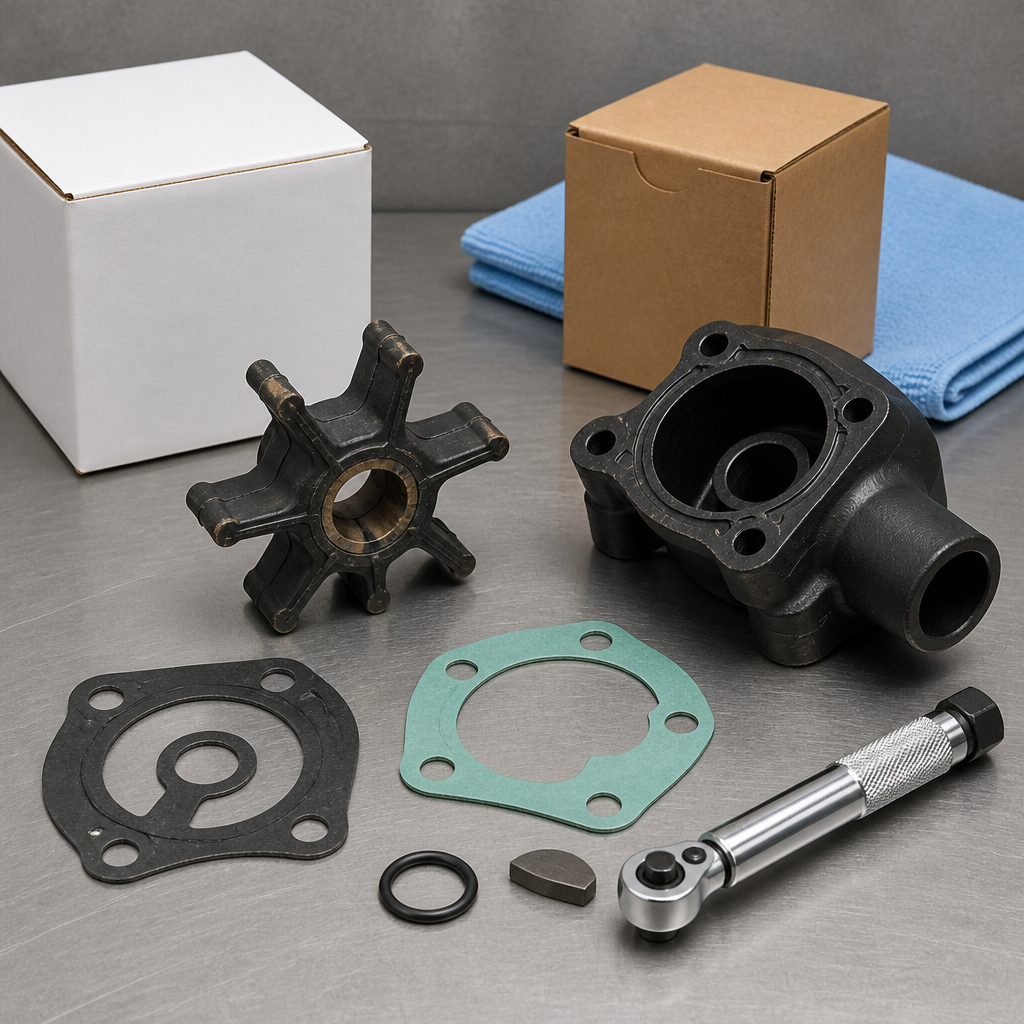
When you inspect the impeller, look for missing vanes, torn tips, cracks at the hub, or rubber that has taken a permanent set and no longer springs back. Rubber bits in the flush port, the intake or the pump housing are a clear sign the impeller is breaking down. Even a single missing vane can reduce flow noticeably.
Do not count on a partial impeller to last one more season. A pump with missing vanes has less capacity, and the next hot run will expose the shortfall. Replace the impeller and inspect the housing for fragments before reassembly.
Dry Starts and Low Water Launches
Running the engine out of water, even briefly, is hard on an impeller. This happens during trailer launches in shallow water, when the lower unit is not fully submerged before start, or when a boat sits in low water. Each dry start can take a bite out of the vanes.
If you know you have run an engine dry, treat it as a real event and inspect the impeller before the next outing. The damage is not always visible at first, but it often shows up later as a weak stream or a rising temperature. A quick inspection after a bad launch is cheap insurance.
Why Impellers Wear Out Faster on Central Florida Lakes
Impeller life depends heavily on what the engine pulls through its intake. Lakes with heavy vegetation, sandy bottoms and shallow coves put more abrasion and debris into the cooling system than clean open water does. Owners on the Clermont Chain of Lakes should plan maintenance around that reality.
Sand, Grit and Vegetation
Sand and grit act like sandpaper on the rubber vanes, slowly wearing down their edges until they stop moving water efficiently. Weeds and plant debris can wrap around the intake and restrict flow before the pump even sees the problem. Both can cut impeller life well short of what you would expect under clean conditions.
We see the most wear on boats that spend a lot of time in shallow, weedy water, especially when the intake is not checked after a day on the water. Rinsing the intake and checking the telltale after each trip removes much of the buildup before it reaches the pump. It takes a few minutes and pays off every season.
Trailer Launches and Shallow Water Mistakes
Launching in shallow water is one of the most common ways owners run an engine dry. If the lower unit is not submerged before start, the impeller can take damage in seconds. Busy ramps can make it easy to start too early.
Start the engine only after the lower unit is fully in the water, and keep the throttle low until the telltale shows a strong stream. Avoid long idles in shallow, weedy water, because the intake can pull in material faster than you expect. These habits cost nothing and extend the life of the pump.
Age Matters Even When Hours Are Low
Rubber ages whether the engine runs or not. A boat that spends most of its time on a trailer or in a lift can still have a tired impeller after a few seasons. Hours of use are only part of the picture, because heat, sun and storage all affect the rubber.
Build impeller inspection into your seasonal routine, not just your running hours. A pump that looks fine on the surface may have hardened vanes that are close to failure. Replacing on a schedule costs far less than replacing after the engine has overheated.
Impeller Replacement and Pump Service Near Clermont
When the signs point to the pump, the fix is usually an impeller replacement, and sometimes a broader water pump service that includes housing inspection and cleaning. We work on Yamaha, Mercury, Suzuki and Tohatsu outboards for owners in Clermont, Tavares, Groveland, Mascotte and around the Clermont Chain of Lakes, with one mechanic handling the job from start to finish.

Choosing Between DIY, Shop-Sourced Parts, and Your Own Parts
There are three realistic paths. You can do the swap yourself, let the shop source the parts and do the install, or bring your own parts to the shop. Each has a different balance of cost, risk and convenience, and the right choice depends on your comfort with lower unit work.
The table below compares the three options. The trade-off is the same across all of them: a correct install depends on the right part and careful reassembly.
| Option | Best For | Trade-off to Know |
|---|---|---|
| DIY impeller kit swap | Owners comfortable with lower unit work and a service manual | Small errors with gasket seating, housing alignment or shim placement can bring back the same failure |
| Shop-sourced parts with shop installation | Owners who want one point of responsibility and an itemized estimate | You approve the itemized estimate online before any work begins, so parts and labor are settled up front |
| Customer-supplied parts with shop installation | Owners who already have a verified impeller kit or prefer a specific part brand | Confirm the part number matches your engine and horsepower before the install starts |
Pro tip: Before ordering any impeller, record your engine's model, horsepower and serial information. Kits differ by engine and year, and the right part is the first step to a repair that lasts.
What a Proper Pump Service Includes
A proper service means more than pulling the old impeller and pushing in a new one. The housing should be inspected for fragments and wear, the water passages should be cleared, and the pump should be checked for leaks and correct reassembly. Then the engine should be run and the telltale checked under load.
Booking is simple. You can request service online or by phone, and every request is confirmed by email. Once the itemized estimate is in, you approve it online before work starts, and invoices can be paid securely online. If your motor is under factory warranty, the brand's dealer handles the warranty claim, and we will tell you that up front.
We are not a factory dealer, and we will say so when a job is better handled elsewhere. That candor is part of the service. The goal is to get your engine back in the water with a pump you can trust, at a price you agreed to in advance.
Frequently Asked Questions
How often should an outboard impeller be replaced?
There is no fixed lifespan. Inspect the impeller every season and follow your manufacturer's service interval, and replace it sooner if you have run the engine dry or spent a lot of time in weedy or sandy water.
Can I keep running the engine until the end of the day if the stream is weak?
No. A weak stream means the pump is not moving enough water, so the engine can overheat quickly under load. Clear the outlet and check the intake, and if the stream is still weak, shut down and get the pump inspected.
Is white smoke always a water pump problem?
Not always. A brief vapor puff on a cold start is normal. Steam or white smoke that continues after warm-up, or that appears at steady throttle, is a strong sign of a cooling problem.
Will a clogged telltale mean I need a new pump?
Not necessarily. Clear the telltale and check the water intake first, since salt, mud, weeds and debris can mimic pump failure. If the stream stays weak after both are clean, the impeller or housing is the next suspect.
Do you service outboards under factory warranty?
We handle routine maintenance and repair on Yamaha, Mercury, Suzuki and Tohatsu outboards, but we are not a factory dealer. Warranty claims go to the brand's dealer, and we will refer you there.
Tell us which of these signs you noticed first on your own outboard and how you caught it.
We would love your feedback and any insights you would share with others. What perspective would you add?