Gear Lube Service: Protect Your Outboard Lower Unit
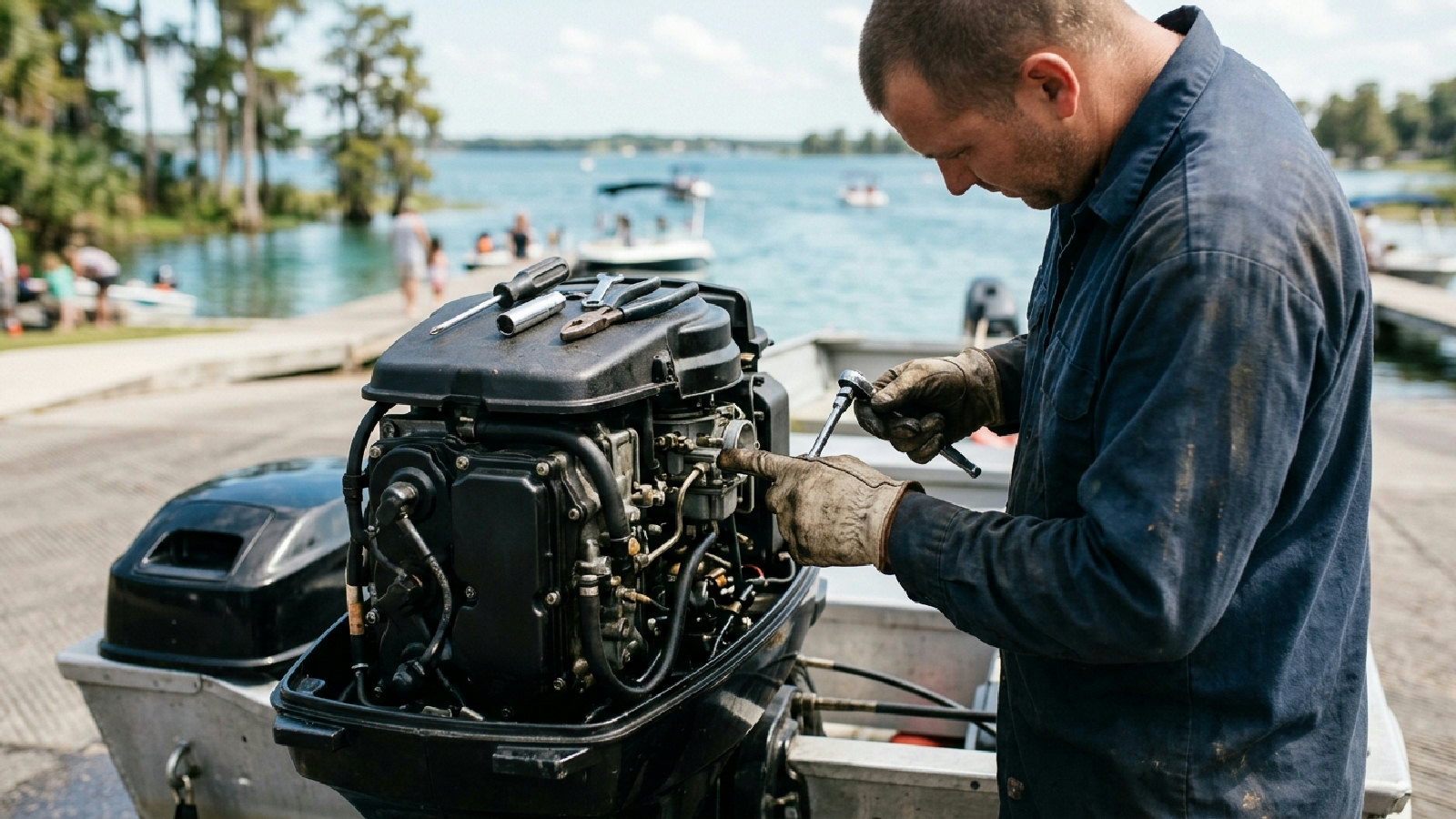
Most outboard owners know when the engine oil was last changed and when the spark plugs were replaced. Far fewer know what is inside the lower unit or when its gear lube was last serviced. That gap matters. Gear lube service on an outboard is one of the cheapest maintenance tasks on the motor, and it is also one of the easiest to skip. The gears below the waterline run in a small reservoir of lubricant, and that lubricant is the only thing protecting them from wear, heat, and water. Here is what the service does, how to tell when it is due, and what to expect when you book it with a local shop in Clermont, FL.
Table of Contents
- Quick Takeaways
- What the Lower Unit Actually Does
- Choosing the Right Gear Lube
- What Happens During a Gear Lube Service
- Warning Signs Your Gearcase Needs Attention
- Gear Lube Service Compared to Other Approaches
- Service Intervals for Central Florida Boats
- What to Expect When You Book in Clermont
- Frequently Asked Questions
- References
Quick Takeaways
| Key Insight | Explanation |
|---|---|
| Change gear lube at least once a year or every 100 hours, whichever comes first | Routine service guides for major brands use this interval. A boat that sits all winter still needs the change, because seals age even when the engine is not running. |
| Milky or creamy lube means water is inside | Water that gets past a seal mixes with the oil and turns it cloudy. Drain it, find the failed seal, and fix it before the next outing. |
| Use the lube your engine's documentation specifies | Yamaha separates its GL-4 gearcase lube from its GL-5 HD product, and it says the HD version is not recommended for other Yamaha outboards. |
| Check the magnetic drain plug for metal | A light film is normal. Visible flakes or chunks mean a gear or bearing is wearing, and the motor should be inspected before it runs again. |
| Overfilling causes as much trouble as underfilling | Excess pressure can push seals out of position. Fill until the lube reaches the level port, then stop. |
| Fresh lube costs far less than a lower unit repair | Gear lube is a small expense. A lower unit rebuild is a major repair that can leave you off the water for weeks. |
| Ask for an itemized estimate before any work starts | A written estimate shows the lube type, quantity, and any seal or washer parts, so you know exactly what is being done before you approve it. |
What the Lower Unit Actually Does
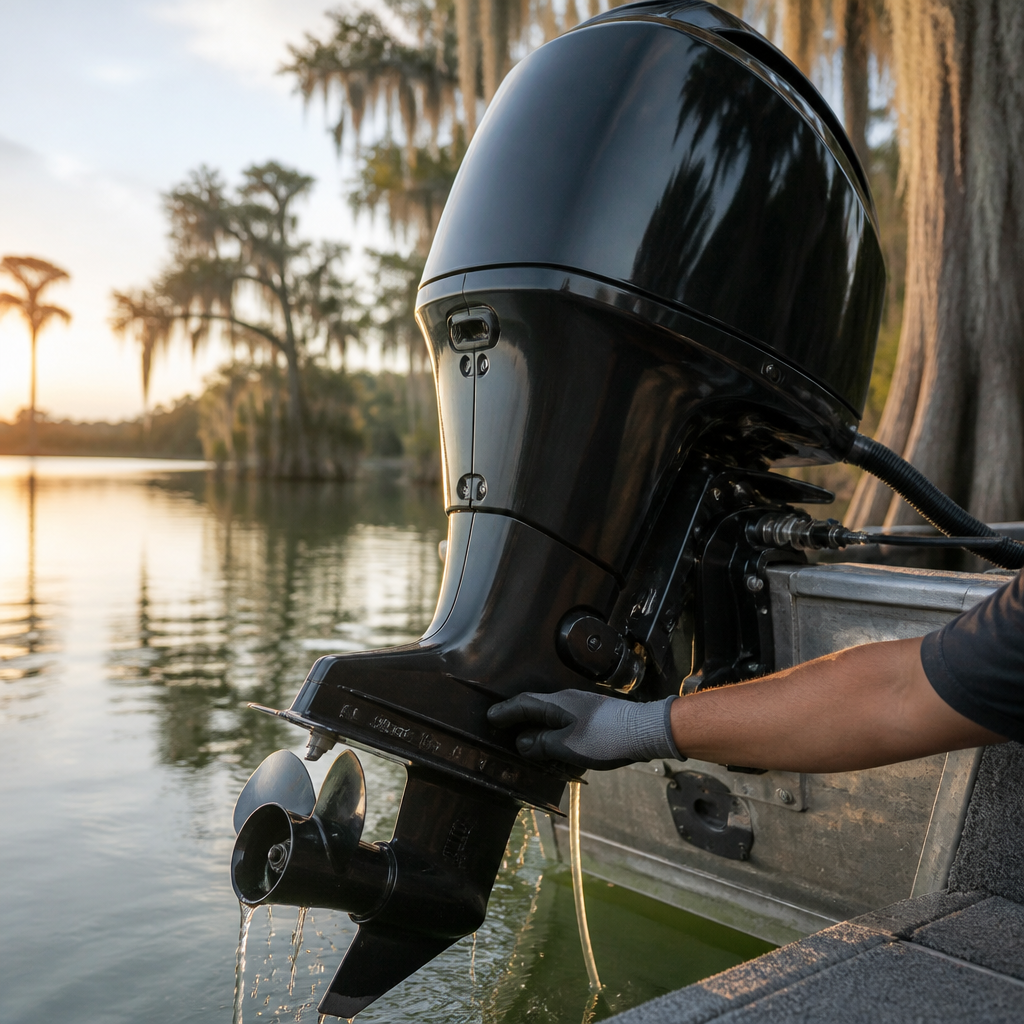
Yamaha describes the lower unit as the part that converts engine power into rotation of the prop shaft, which turns the propeller and moves the boat. A vertical driveshaft carries power down from the powerhead. A set of bevel gears then turns that power 90 degrees into the horizontal propshaft. Everything in that chain is metal, and every piece is working under load.
The gears run in a sealed oil bath, so the lubricant does three jobs at once. It separates the gear teeth, it carries heat away, and it keeps wear debris suspended until the drain plug catches it. Gear lube is not a passive fluid. When it breaks down, the gears lose their protection quickly.
"The gears inside your lower unit are constantly turning, and the only protection they have is the lower unit lubricant you use." This is the core reason gear lube belongs on the same maintenance list as engine oil, not on a list of optional extras.
Seals at the driveshaft, the propshaft, and the vent and drain plugs keep water out of the gearcase. Yamaha's description of its gearcase lube notes that the additive package helps maintain seal pliability and prevents leaks. In practice, that means old oil that has lost its additives lets seals dry, harden, and crack, and owners rarely see the damage until water is already inside.
Why the Gears Never Really Rest
The gears only turn while the motor runs, but every hour on the water is a full hour of load, heat, and vibration. Shifting into gear at speed, backing down hard, and running through chop all put stress on the bevel gears and bearings. The lube has to hold a film under all of that.
In our experience, owners who run a lot of hours in a season see the lube break down faster than the calendar suggests. That is why hour counts matter as much as dates.
How Water Gets Into the Gearcase
Water rarely pushes through a healthy seal. It usually gets in through a seal that has aged, been nicked by a line or debris, or been shifted by a hard strike on a submerged object. Trailering over rough roads and hitting a stump in shallow water can both move a seal enough to start a leak. Once water is inside, every hour of running spreads it through the lube, and the gears start to pit.
Choosing the Right Gear Lube
Gear lube is not interchangeable across all outboards. Yamaha's current lineup illustrates the point well. Its standard Marine Gearcase Lube is a GL-4 product for most outboard lower units, but the manufacturer lists specific exceptions, including certain large V8 and high-output V6 models. Its HD version is a GL-5 product intended for the 200-250 models, the 4.2L Offshore, and XTO units, and it is explicitly not recommended for other Yamaha outboards.
Mercury, Suzuki, and Tohatsu publish their own lube specifications for their gearcases, and those specifications change by model year and horsepower. The point is simple. Match the lube to the documentation for your exact motor, not to the bottle that happens to be on the shelf.
GL-4 and GL-5 in Practice
GL-4 and GL-5 are gear oil performance categories, and the difference is mainly in how each product handles extreme pressure in the gearset. Engines that call for GL-5 are often built with gear designs that load the lube more heavily. Putting the wrong product in a gearcase may not cause an immediate failure, but it removes the margin the designers built in.
A common mistake is buying automotive gear oil because it is cheaper or easier to find. Marine gearcase lubes include rust and corrosion inhibitors that matter in a wet environment, so automotive products are the wrong choice for an outboard lower unit.
Pro tip: Write the lube type, quantity, and service date on a strip of masking tape inside the console or on the motor cover. The next person who opens the gearcase, including you, will know exactly what went in.
Reading the Owner Manual Before You Buy
Your owner's manual gives the lube specification, the fill quantity, and the torque for the drain and vent plugs. Those three numbers prevent most gearcase mistakes. Keep the manual with the boat, and check it before you buy product rather than relying on memory from the last service.
What Happens During a Gear Lube Service
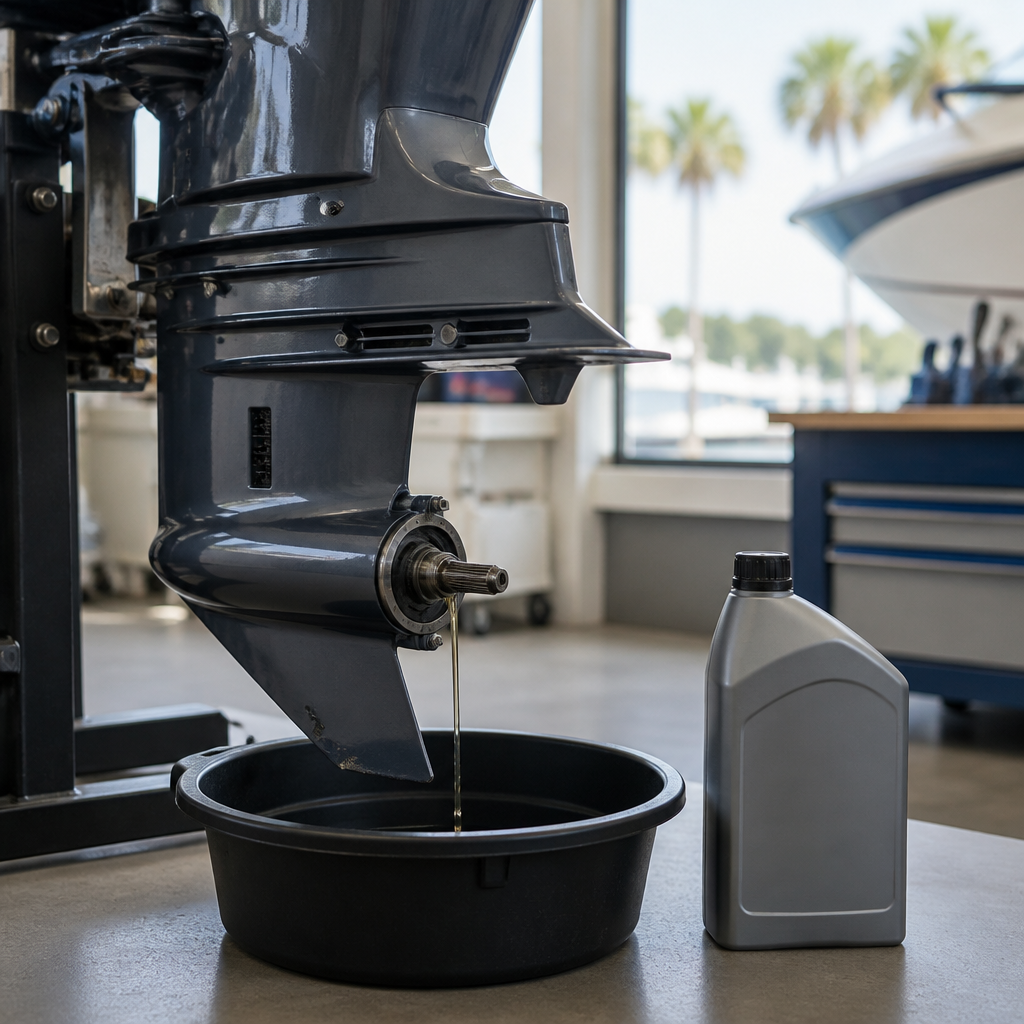
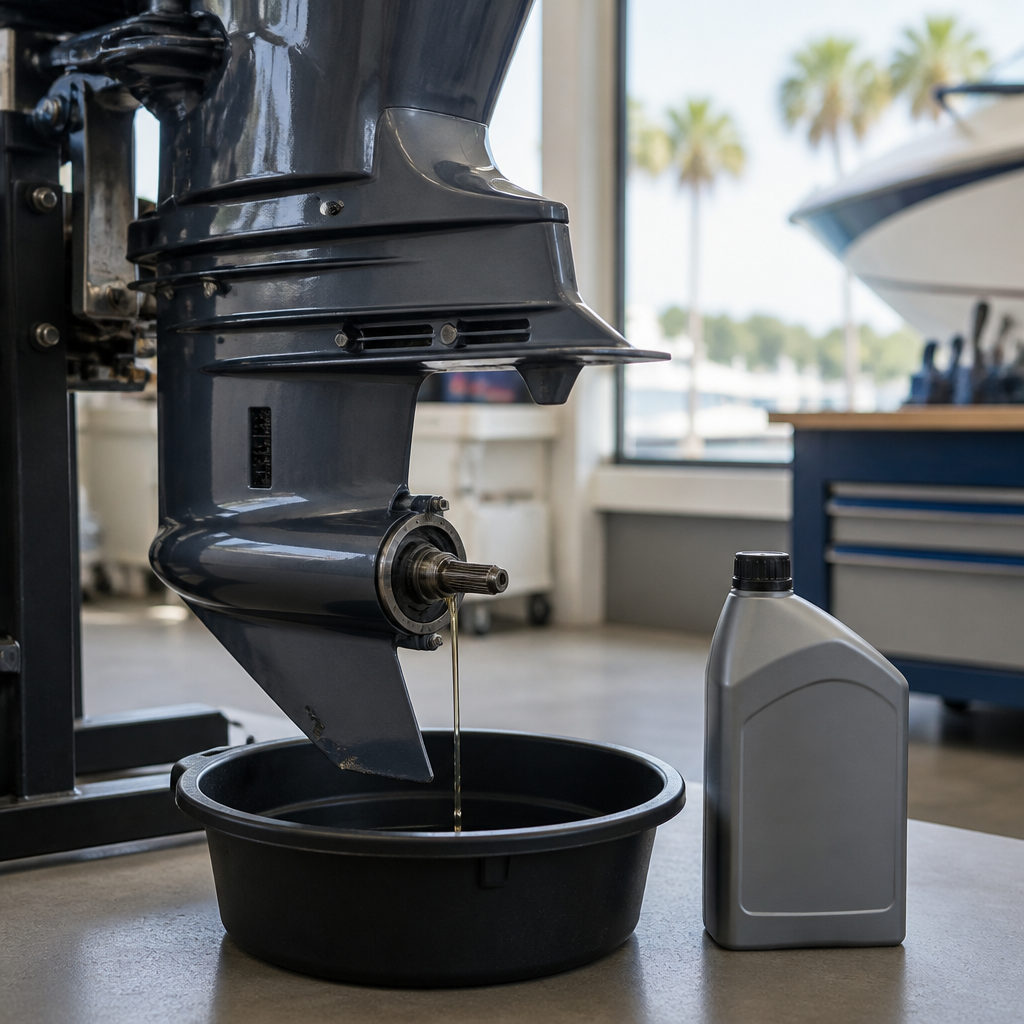
A proper gear lube service starts with a look at the old oil, not just a drain. The motor is set upright, the drain and vent plugs are removed, and the old lube is caught in a clean container. The color, smell, and texture of what comes out tell the technician more about the health of the lower unit than any single number.
Once the gearcase is empty, the technician checks the magnetic drain plug for metal and inspects the plugs' sealing washers. Washers are cheap, and reusing a crushed or cracked washer is a common cause of slow leaks after a service. New washers go in with every service, without exception.
Draining and Inspecting the Old Oil
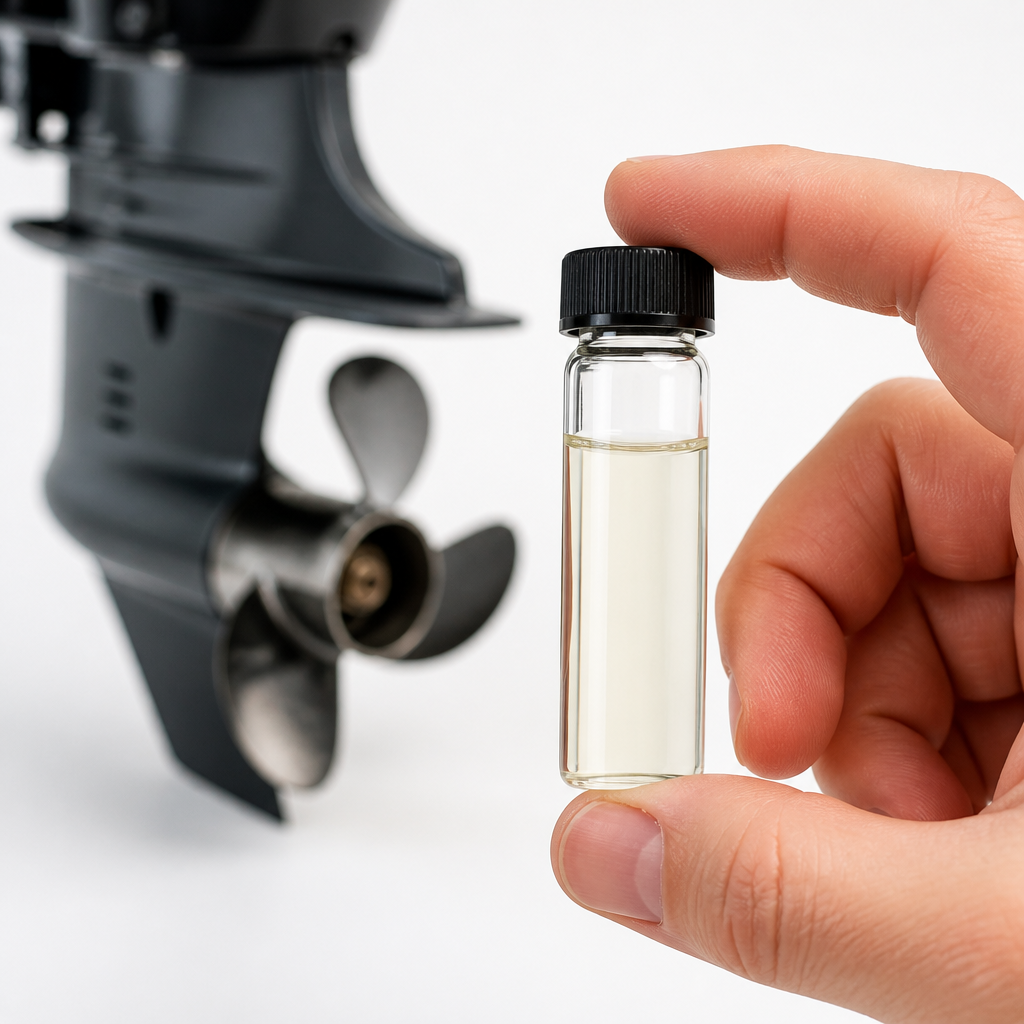
Fresh gear lube is typically clear and light in color. Old lube may look darker, but a dark color alone does not mean the lube has failed. What matters is whether the oil is clean, free of water, and free of visible metal. A cloudy, creamy, or frothy appearance is a red flag that needs a seal inspection before anything else is done.
Any visible particles on the magnetic plug should be recorded and photographed. A light film is normal wear. Larger flakes or chunks mean the lower unit needs to be opened and inspected, because the lube service alone will not fix the problem.
Refilling, Venting, and Checking for Leaks
Refilling is done from the bottom drain port with a pump kit. The technician keeps pumping until lube appears at the upper vent, which shows the gearcase is full and the air is out. The vent is then sealed with a new washer, and the level is confirmed.
After the fill, the motor is run briefly in gear and then checked for leaks around every plug and seal. A second check of the level after a short run is standard practice, because a little air can settle out of the gearcase once the lube warms up.
Pro tip: Always replace the drain and vent washers during a gear lube service, even if the old ones look fine. A washer that has been compressed once rarely seals a second time without weeping.
Warning Signs Your Gearcase Needs Attention
Most lower unit failures announce themselves well before they strand you on the water. The problem is that owners often notice the symptom and assume it is something else. A gearcase that is due for service or is already leaking will usually show a clear pattern if you know where to look.
Start with the drain plug at every oil check. A drain plug that comes out dirty, damp, or with a milky film on the threads is the most common early sign of trouble. Pair that observation with a quick look at the oil level, and you will catch most problems while they are still inexpensive to fix.
Milky or Creamy Lubricant
Water in gear lube turns it cloudy, pale, or creamy, often described as looking like a milkshake. This is the clearest sign of water intrusion, and it should never be ignored. The fix is a seal inspection and replacement, followed by a full lube change, not a simple top-off.
Running with water in the gearcase accelerates corrosion on the gears and bearings. Owners who see this once and then keep running the boat for a season often end up with a far larger repair.
Metal on the Magnetic Drain Plug
Metal on the drain plug is useful information when it is read correctly. A fine, uniform sheen is normal wear, while chunks, flakes, or a visible gritty layer point to gears or bearings that need attention. Do not run the motor to see whether the problem goes away.
Noise and vibration under load are also reasons to pull the lower unit for inspection. Gear whine, grinding, or a propeller that seems loose on the shaft should be checked by a technician before the boat goes out again.
Gear Lube Service Compared to Other Approaches
Owners generally handle gearcase maintenance in one of three ways. Each has a place, but they produce very different results over several seasons. The table below compares them on the points that matter most for a Central Florida boat that spends its time on lakes and in the shallows.
| Approach | Best Suited For | Main Drawback |
|---|---|---|
| Full gear lube service at a shop, with drain, inspection, refill, and leak check | Owners who want a written record, a visual inspection of the old oil, and new washers installed every time | Costs more than a home refill and requires booking ahead during busy months |
| Do-it-yourself drain and refill with a hand pump | Owners comfortable with basic tools who check the lube every season and know the correct spec | Inspection is easy to skip, and incorrect fill levels or reused washers cause leaks that show up later |
| Changing lube only when the motor is already in for other work | Owners who log low hours and have a reliable schedule with a shop | Lube can go years without a change, and water intrusion can progress unnoticed between visits |
The honest answer for most owners is that a shop service costs less over time than a lower unit repair. A home refill is a reasonable choice if you have the right spec and the discipline to inspect every time. Letting a boat run on old lube until something fails is the most expensive option of the three.
Service Intervals for Central Florida Boats
Many major manufacturers recommend routine outboard service every 100 hours of operation or at least once a year, whichever comes first. A lower-unit gear oil change is part of that annual service in most shop checklists. The interval is a starting point, and the right answer depends on how the boat is used.
Central Florida boats often do not fit the standard pattern. A motor may log only 30 or 40 hours in a year, but it still sits through hot summers, trailers across town, and long stretches of storage. Calendar time matters as much as hours for a boat that spends its life in a lift, a driveway, and the water in between.
Hours Versus Calendar Time
Track both numbers. Log hours from the engine's hour meter or your own notes, and track the date of the last gear lube change on the same sheet. Whichever limit comes first is the one that should drive the schedule.
A boat used heavily for fishing or pontoon cruising can reach 100 hours faster than most owners expect. Those hours are often spent at slow speeds in shallow water, which is hard on seals and on the gearcase when the motor is trimmed and moved in and out of gear.
Heat, Trailering, and Debris
Heat and sun accelerate the breakdown of rubber and synthetic seals. A motor parked in direct sun for months gets more stress than one stored in the shade, even with the same hour count. Trailering adds vibration and shock that can loosen plugs or move seals out of position.
Weeds, lines, and debris are another factor. A line wrapped around the prop can damage a seal, and a hard strike can crack a gearcase housing. After any impact, inspect the lower unit before running the motor again.
Pro tip: If you cannot remember when the gear lube was last changed, treat it as overdue. A service costs far less than discovering water in the gearcase after the damage has already spread.
What to Expect When You Book in Clermont
Gann Marine LLC is an independent outboard repair shop in Clermont, FL, serving boat owners around the Clermont Chain of Lakes and nearby communities, including Tavares, Groveland, and Mascotte. The shop works on Yamaha, Mercury, Suzuki, and Tohatsu outboards, and gear lube service is one of its routine maintenance jobs. The process is designed to be straightforward, with no surprises on the invoice.
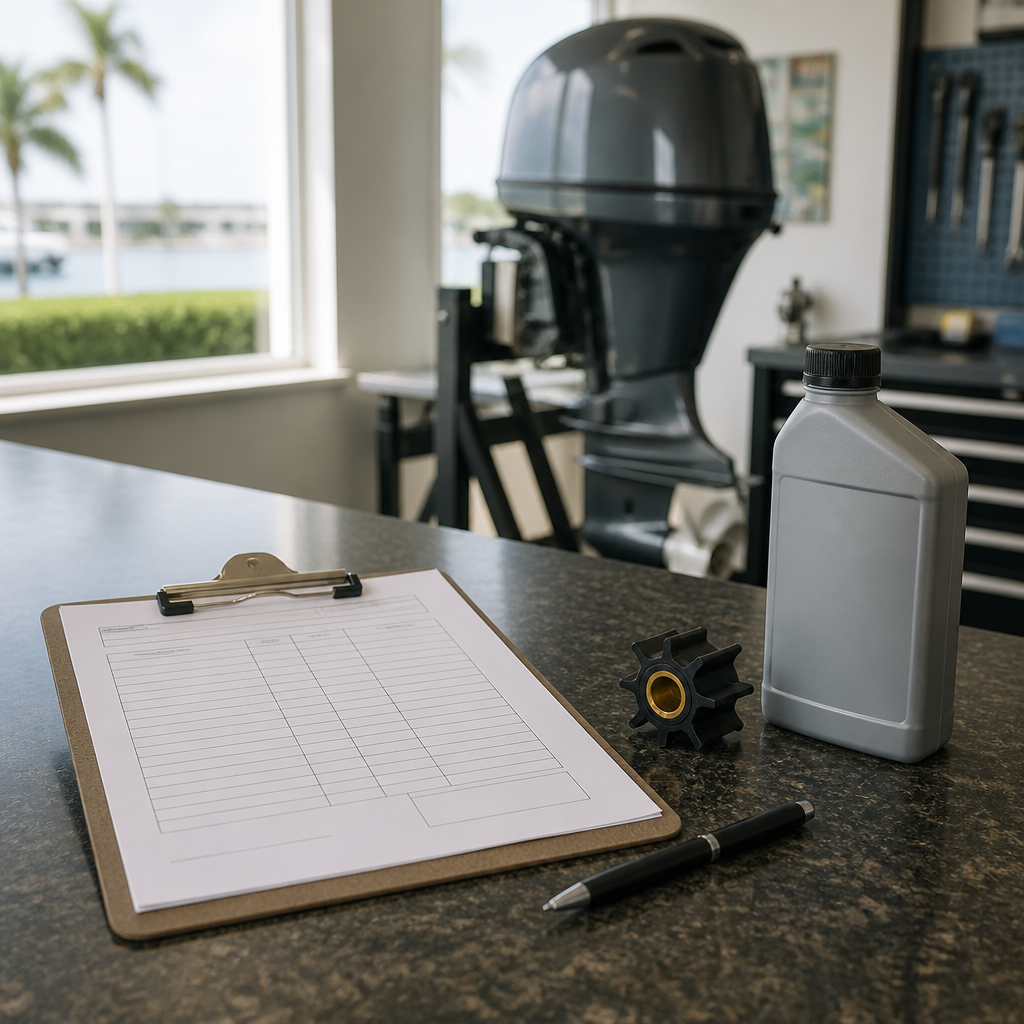
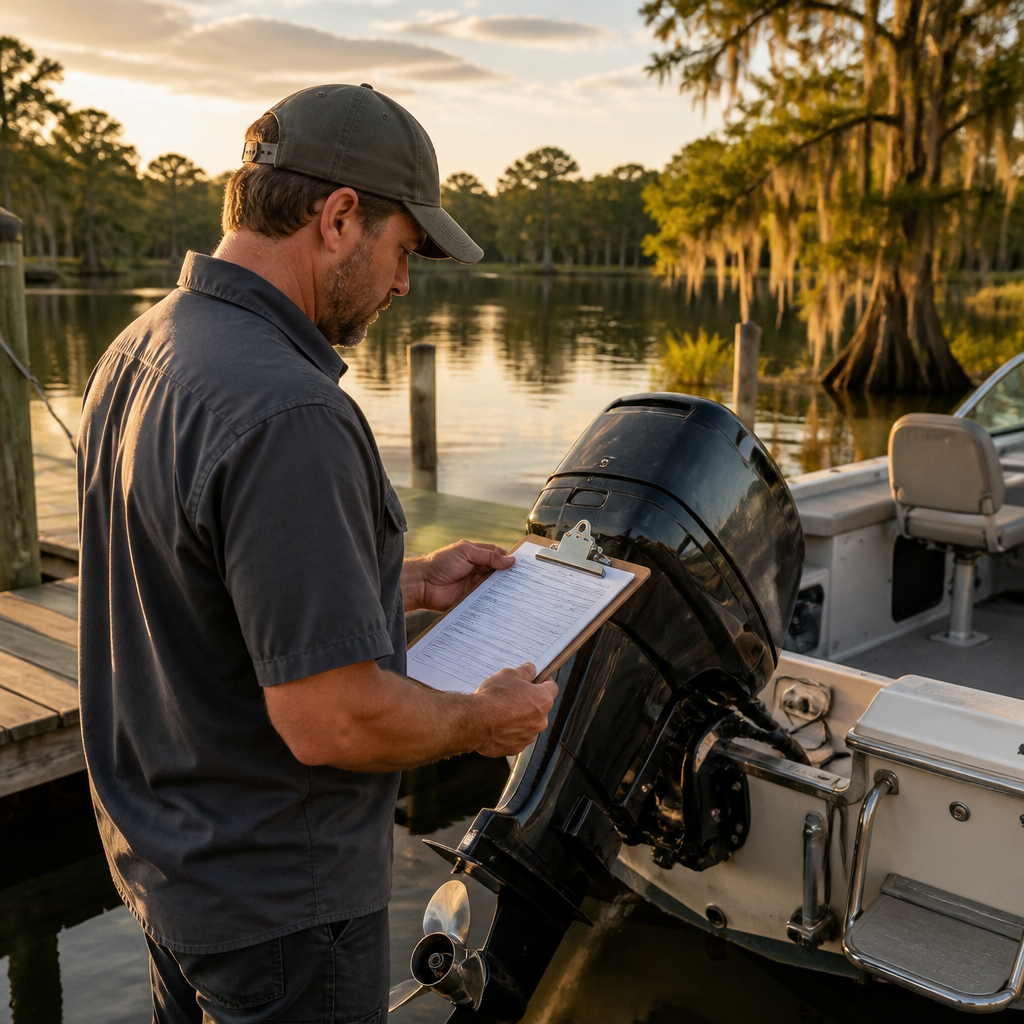
Service requests can be booked online or by phone, and each request is confirmed by email. Once the shop has inspected the boat, you receive an itemized estimate that must be approved online before any work begins. Invoices can be paid securely online after the job is finished.
One Mechanic Who Stands Behind the Job
Every job at the shop is handled by one mechanic from start to finish. That continuity matters for gear lube service, because the person who drains the lube and inspects the old oil is the same person who checks for leaks after the refill. You are not handing your boat to a different person at each step.
The shop is not a factory dealer. If a repair falls under the manufacturer's warranty, the claim is referred to the brand's dealer. If a job is better handled elsewhere, the shop will say so and recommend another provider.
We would love your feedback and any insights you would share with others. What perspective would you add?
Parts You Supply or Parts the Shop Sources
You can have the shop source the gear lube, washers, and any seal parts, or you can supply your own. Either way, the itemized estimate shows exactly what is being used, so you can compare the cost of your own parts with the shop's. Owners who buy the correct lube for their motor can save money without giving up the inspection.
When the old oil shows signs of water or metal, the shop will explain what it found and what it recommends. The decision to proceed with any additional repair is always yours, after you approve the updated estimate.
Frequently Asked Questions
How often should gear lube be changed on an outboard?
Most routine service guides call for a gear lube change at least once a year or every 100 hours, whichever comes first. A boat that is heavily used or has seen water exposure may need a check sooner. Use the manual for your specific motor as the final authority.
What does milky gear lube mean?
Milky or creamy gear lube usually means water has entered the gearcase, most often through a worn or damaged seal. Drain the lube, inspect the seals, and fix the leak before running the motor again. A simple top-off will not solve the problem.
Can I use automotive gear oil in my outboard lower unit?
No. Marine gearcase lube contains rust and corrosion inhibitors that matter in a wet environment, and automotive gear oil does not provide the same protection. Use the specification listed in your owner's manual.
Do I need gear lube service if I only boat on freshwater lakes?
Yes. Freshwater does not remove the need for service. Lube still breaks down with heat and hours, seals still age in storage, and water can still enter through damaged seals. Lakes with weeds and debris can add more stress to the lower unit.
Will a gear lube service fix a noisy lower unit?
Not always. A service includes an inspection of the old oil, which can reveal problems, but noise or vibration may point to worn gears or bearings that need repair. If the drain plug shows metal or the noise continues after service, the lower unit should be opened and inspected.
Does gear lube service affect my manufacturer warranty?
Routine maintenance records help when a warranty claim is made, so keep a written record of every service. Gann Marine is not a factory dealer, so warranty claims are referred to the brand's dealer. The shop can provide documentation of the work it performed.
Tell us about your own gear lube experience on Central Florida lakes, including anything a drain plug or inspection has revealed that surprised you.